
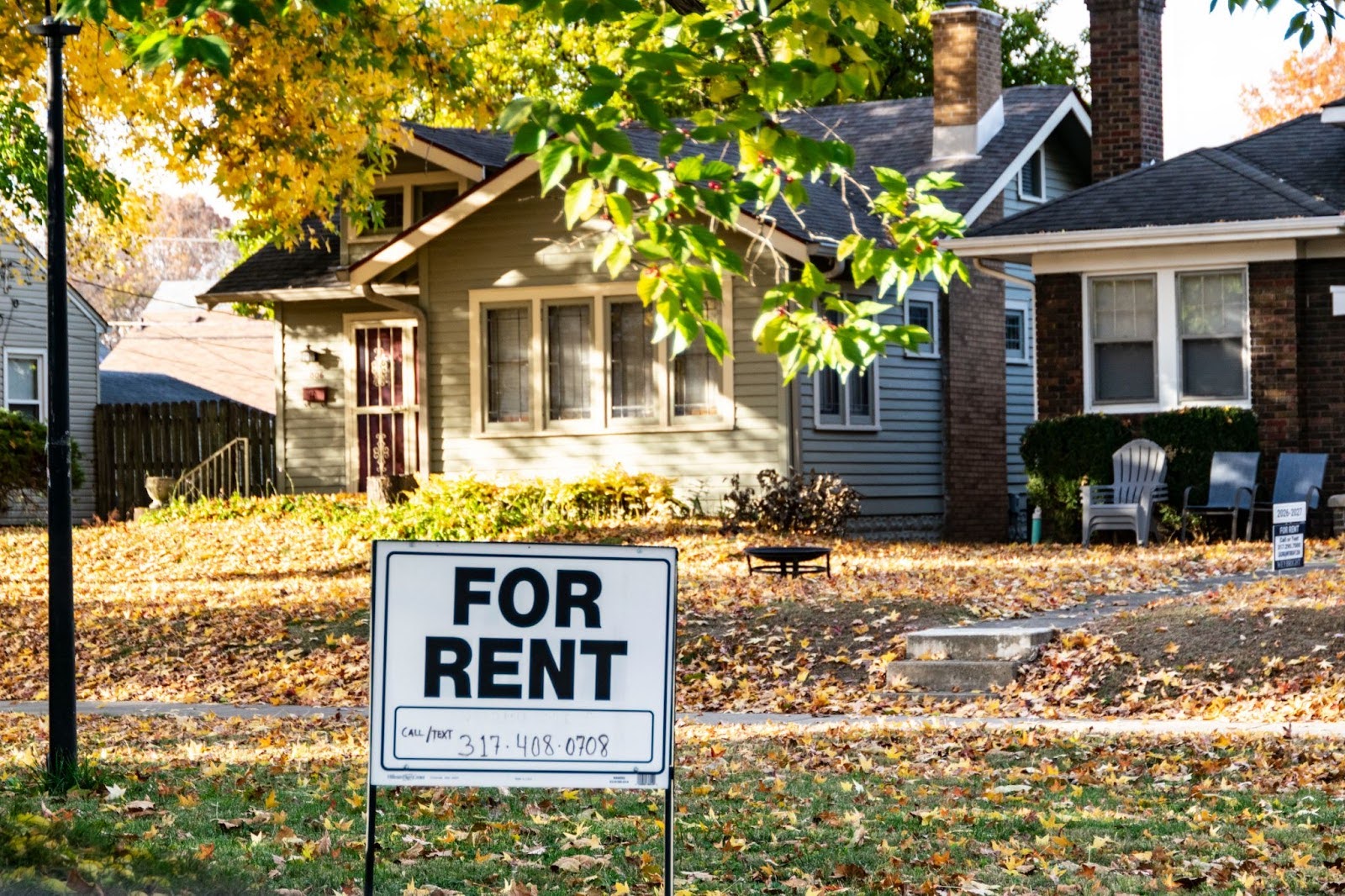
The houses surrounding Butler’s campus often serve as housing options for seniors. Photo by Ella Beu.
ELLA HALL | STAFF REPORTER | erhall@butler.edu
This year, Residence Life saw nearly 200 applications come in for Resident Assistant (RA) positions amid rising concerns about the cost and accessibility of housing options.
While residence life officials claim that a major reason for applications is because of positive past experiences with RAs, several students have cited frustrations surrounding Butler housing as a reason for seeking out this on-campus residential alternative.
Sophia Mendez, a junior mechanical engineering and math dual major, was one of the RA applicants who expressed her frustrations with finding affordable housing options.
“The tuition is really expensive; any chance I get to [reduce it by] a few thousand, that’s everything to me,” Mendez said. “Everything’s gotten a lot more expensive.”
This is the third year in a row Mendez has applied for an RA position, but the first time she has made it to the interview stage.
Lisa Neblett, a sophomore public health and marketing double major, is another student who has experienced the frustration of having her RA application declined.
“They didn’t really tell me in a direct [manner] why they didn’t pick me,” Neblett said. “They just said that [it was] because of the competitive nature of applying to become an RA.”
Assistant director of Residence Life Marti Wein explained in an email to the Collegian that there are a total of only 55 RA spots available.
“About half of [the current RAs] are going to return to their roles,” Wein stated. “There is never a year where we don’t turn down students who are qualified, and it is solely due to the fact that there are not many spots available. A lot of students want to become [RA]s.”
Neblett expressed that her application stemmed from a desire to build a larger community on campus as a commuter student at Butler.
“It [would have been] a benefit to have free housing and free food, but I actually do enjoy engaging with the community, especially as a commuter,” Neblett said. “It’s very hard because you have to come back and forth to campus, so I think it helps to stabilize where your community is.”
Building community is not just an issue for commuters, as many seniors spend their final year at Butler living off campus.
Last year, in response to feedback from students seeking additional on-campus housing options, an initiative promising new apartments for Butler seniors was announced in a now-deleted post on Butler’s website.
Butler’s previous vice president for student affairs, Frank Ross III, had released the announcement, but there have been no further updates.
This leaves limited options, especially for seniors, as Butler’s housing policy does not prioritize seniors applying for on-campus housing, leaving off-campus rentals as the primary solution.
The housing market surrounding Butler has issues of its own. Weybright Management Inc. — the real estate company that serves the majority of Butler seniors — has had its fair share of controversy. Rising rent prices and a competitive nature that leads to early lease signings — during sophomore year for many — have created anxieties around securing a decent place to live.
Mendez’s concern over residential proximity to campus highlighted similar anxieties.
“Life is more accessible if you live on campus,” Mendez said.
For many, the RA position exists as one of the few ways to secure guaranteed on-campus housing and financial relief, but as applicant numbers mount, it is uncertain if this will remain a viable option.