
Music has been used to convey a message, celebrate birth or death, teach, explain and move the world forward. It has been used in social movements, such as Childish Gambino’s “This is America”, which discusses the hardships faced by the Black community, or John Lennon’s “Give Peace A Chance”, an anti-war song to protest the Vietnam War.
Political movements need music; it is the center of change. But women are overlooked when it comes to their roles in political change — the ongoing feminist movement has needed music as a form of expression, liberation and protest.
“Labour” by Paris Paloma is a beautiful example of a woman utilizing music as a way to protest. Paloma expresses the complexities of a woman’s identity and roles forced upon them, and the song expresses concerns about women’s unfair treatment. The song, released in 2024, targeted the various ways women face unjust social and political expectations. There is a long history of women’s suppression, and performance and music have been vital ways for women to express power. History matters, and change is reflected in it.
Assistant professor of musicology Sophie Benn, PhD, gave a historical perspective on the significance of music within political movements.
“Music can be incorporated into protest movements in a few different ways,” Benn said. “Public demonstrations and public physical protests, music is often used in the form of chants or communal singing. Sometimes it’s a way to keep morale up, like spirits up, a feeling of a unified voice can be really powerful and can help a crowd feel energized and maintain that energy throughout.”
Music and feminism don’t look like one particular genre. Whether it is classical or pop, rock or country, female musicians have spoken out through different tempos, beats and instruments.
There are many examples of music serving as a communal experience and as a form of protest. At the 1963 March on Washington, Mahalia Jackson, a famous gospel singer, performed, “I Been ‘Buked an’ I Been Scorned”. Jackson’s performance is extremely significant due to the intersection of her race and gender, playing a vital role in feminist movements.
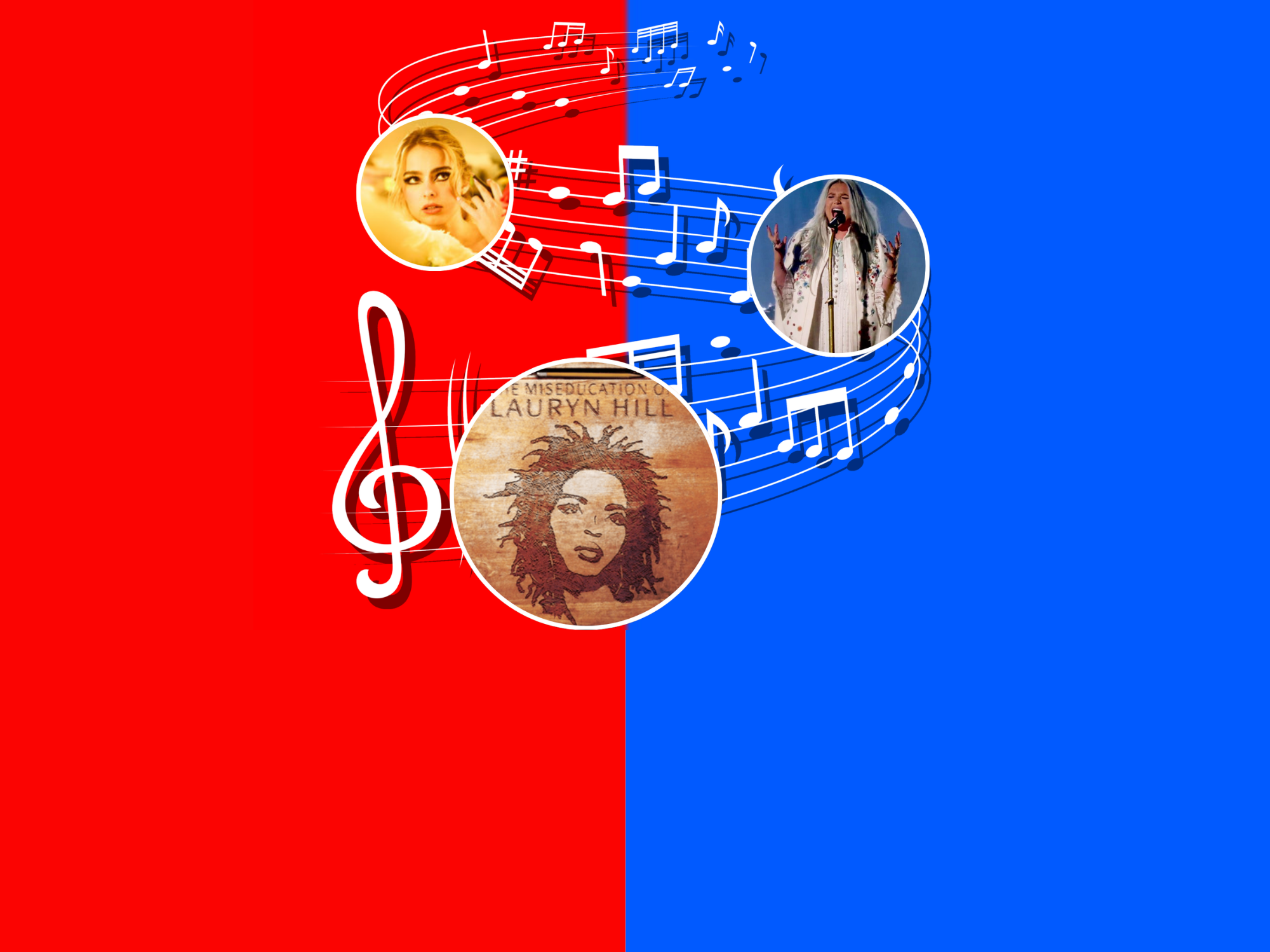
Rap, blues and jazz are three genres that are dominated by Black artists, and Black women have utilized them to raise attention to issues that affect women in the Black community. Hip hop in particular, has a very strong political background. From Queen Latifah’s “Ladies First” to Lauryn Hill’s entire discography, there are many female artists who have spoken up about concerns such as violence against Black women and police brutality.
Manon Voice, lecturer of music and hip hop studies, has observed how musical artists use themes surrounding social justice to bring about progress.
“All of the complexities that we carry in the American experience, in our lived experience, artists are the ones who mirror that back to us,” Voice said. “They become the vanguards, I believe, for change.”
Feminism is about the inclusion of all the pieces and parts of a woman, whether she is a person of color, transgender, disabled or holds any other number of identities. Progress for one woman means progress for all — and music can bring us together even when our differences may seem to divide us.
“Praying” by Kesha is about the singer’s experience rising up after her sexual assault, and it grew into an extraordinary shared experience highlighting all women’s stories and voices. She was able to uplift women who have been put down by men through lyrics such as, “’Cause I can make it on my own, And I don’t need you, I found a strength I’ve never known.’”
Kesha performed “Praying” at the 2018 Grammys, alongside several other women, as a protest against the abuse of women and the power women hold together. At the height of the #MeToo movement, the song became an anthem for those who had risen above their hardships.
Women in the music industry often work much harder in their professional lives than their male counterparts. When examining Justin Bieber’s most recent performance at the 2026 Grammys, you will find he is just there singing for the concertgoers. Then look at Taylor Swift, or Sabrina Carpenter, and you will find that their performances are thought out in large detail. If a female artist were to put on a show in the same way male artists normally do, they would face mass criticism. This makes the playing field extremely uneven, and if anything, suggests that male artists need to step up their game.
Shelby Thickstun, junior music industry studies major, shared her thoughts about current female artists using their performance and power in society to change long-standing narratives.
“Addison Rae, I love what she’s doing for body positivity for women,” Thickstun said. “If you’ve seen some of her videos of her performances, lots of people are judging her. Asking, ‘Why are you wearing that? Why are you moving like that?’ But the whole point is to show that. Women are expected to act a certain way, and she’s trying to break through that.”
Performance, music, protest: these are what have and will continue to liberate and free women. Women have been subjected to oppression for the majority of humankind, but we have used music to eradicate that. Feminism and music are intertwined, performing a dance that has empowered, celebrated and uplifted women through it all.