
“Series Sleuths” investigates the best and worst that television has to offer. Read on to learn if the next TV prospect is binge-worthy, cringe-worthy or somewhere in between.
Warning: Spoilers ahead.
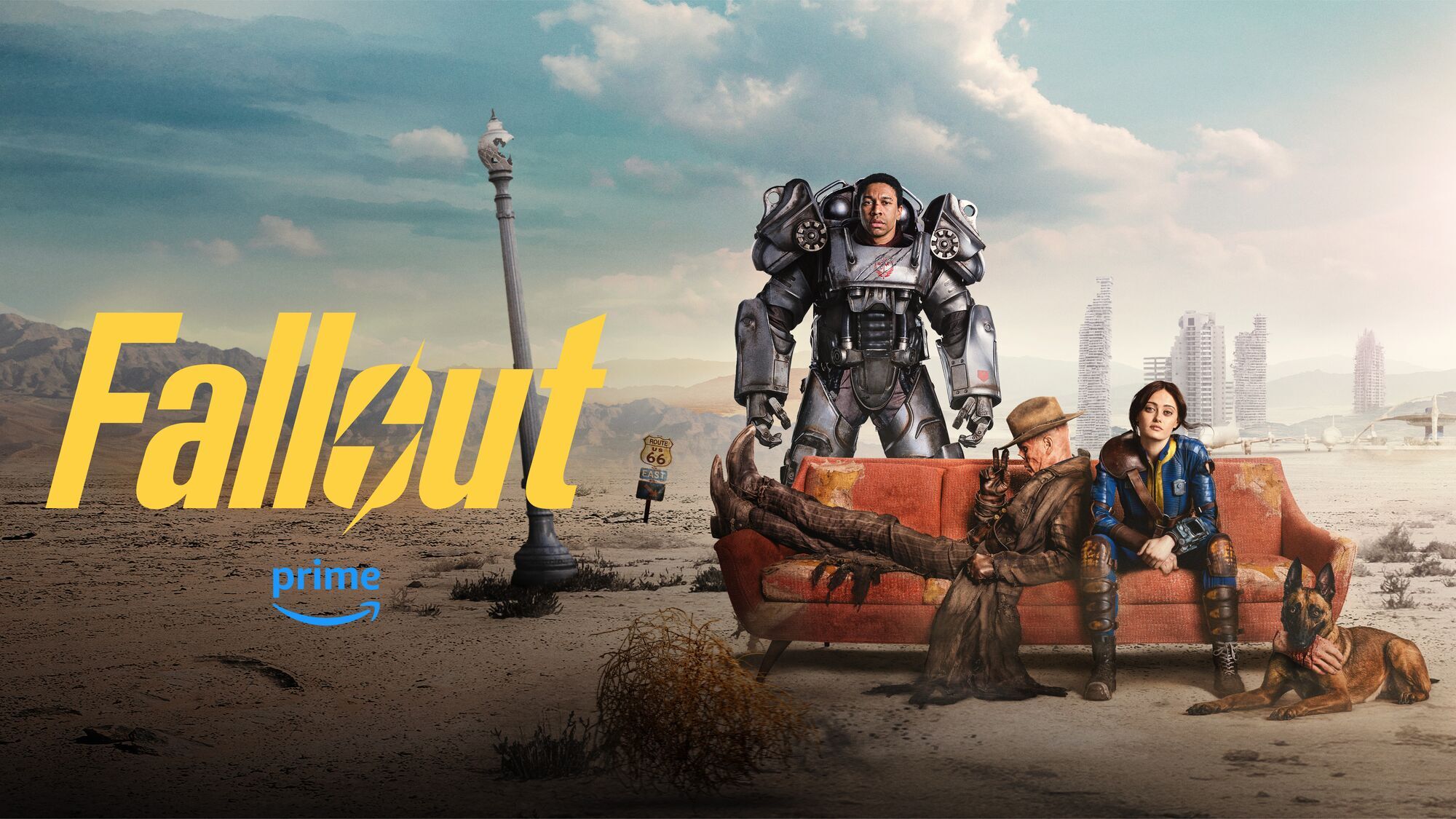
Fans of the “Fallout” show were abuzz when the first season ended with the reveal of the second season’s setting: the Mojave Desert. The view of the devastated Las Vegas Strip stoked the flames of theory-crafting as viewers scrambled to predict the state of the Mojave Wasteland after the events of “Fallout: New Vegas”.
Savannah Sacino, a junior criminology and psychology combined major, believes that in a world of video game adaptations, the “Fallout” show was wise to exist in the same timeline as the games.
“A lot of the times, adaptations of video games have not been very well received because they either don’t play it close enough to the source material or they play it too close and it just doesn’t adapt well,” Sacino said. “The ‘Fallout’ show [has] a really good way of incorporating all of the world aspects of Fallout … While also having some lore elements that fans of the games can appreciate. People who’ve never played the games before can [also] really appreciate the story and the world building.”
The lore implications are immense, especially since both seasons share settings with some of the games.
Though the first season mainly showcased the ruins in and around Los Angeles, the main characters do explore various locations from the Southern California setting of the first and second games. The second season more directly mimics its source material and primarily takes place in known “New Vegas” locations.
The “Fallout” games are known for having multiple endings based on how the player decides to help or hurt each faction presented to them. This is where the discourse about lore comes in, as making a continuation of an open-ended story has implications about what really happened in the games.
How does the show reconcile these many branching paths? When every player’s experience is completely unique, what does a truly canon “New Vegas” playthrough look like? The answer is simple: the show is set far enough forward that it does not matter.
Junior physics major Corbin Austin believes that refusing to address the many possibilities of the “New Vegas” story is simpler and more engaging.
“People can come to their own conclusions about what they think happened [before] the show, but making it super definitive makes it so that this game has to have a defined ending,” Austin said. “Leaving it vague leads to a better experience when they go back to play that game.”
While this may initially seem like a cheap move to dodge around the open-ended nature of the games, the way it is written actually reinforces the main theme of the franchise: war never changes. No matter who the player saves or kills, the various factions will always be fighting each other.
The ambiguous death of the Rome-obsessed tyrant Caesar is unimportant, because he had brain cancer in the game and would have died one way or another. No matter what crime family rules the New Vegas Strip, nobody could have stopped the deathclaws — mutated monsters from the games — from taking over. Ultimately, violence always prevails over peace in the wasteland.
“Fallout” is great at showing the mangled future of a world at war with itself, but it also gives viewers a look into its past. The games establish that the pre-nuclear “Fallout” world was stuck in the Cold War well into the 2070s, and most of the glimpses into that past were through environmental story-telling like audio logs and notes. The show switches things up by introducing a plotline set before the bombs dropped and exploring the mystery of who dropped them and why.
One of the other big draws of the show aside from the fan-favorite references is the lack of reliance on CGI. Even the franchise’s famous power armor suits, Walton Goggins’s look as The Ghoul and the aforementioned deathclaws are a mix of practical and digital effects.
Rachel Joyce, a sophomore creative writing and psychology double major, expressed that CGI may sometimes be necessary to make effects smoother.
“I like where they’re going with a lot of the effects, but I [feel] like there’s a different way [they] could set everything up to where it still looks graphic, gripping and video game-esque without feeling choppy,” Joyce said. “Some of the scenes were over the top, but it is still based on a video game. I like [that] they’re trying to capture those elements [and] that immersion.”
Though the show shines a spotlight on the Enclave and the Brotherhood of Steel — warring cabals whose conflict is the main plot in “Fallout 3” — frequent mention of the Commonwealth Wasteland of “Fallout 4” make it unclear where the conflict will move to. With revived factions and a mysterious threat lurking on the horizon, one thing is clear for the future of the games and the show alike: something big is coming.
“Fallout” is available to stream on Amazon Prime Video. The “Fallout” games can be found on most major online game stores.