
Content warning: mention of suicide.
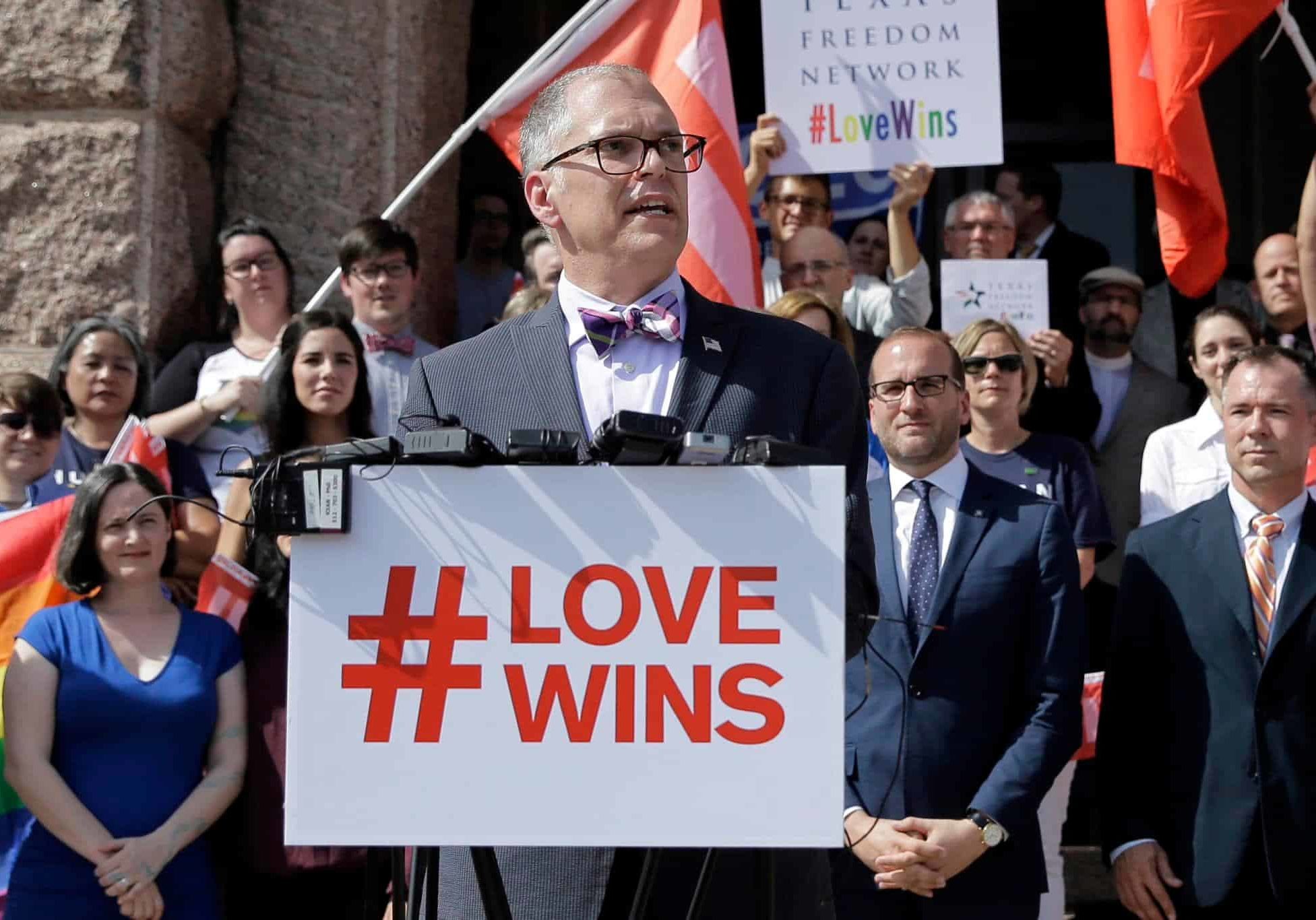
Jim Obergefell, the lead plaintiff in the landmark Supreme Court case Obergefell v. Hodges, has become one of the most recognizable voices in the fight for marriage equality. What began as a deeply personal effort to honor his late husband, John Arthur, ultimately reshaped LGBTQIA+ rights in the United States. Since the 2015 decision that guaranteed same-sex couples the fundamental right to marry, Obergefell has continued to advocate for equality, sharing his story across the country as both an activist and educator.
On Feb. 3, Obergefell will visit Butler University as the keynote speaker for Founder’s Week, an annual celebration of Ovid Butler’s legacy of abolition, equality and social justice. The Butler Collegian spoke with Obergefell before his address, in which he reflected on the evolution of his activism, the emotional weight of his legal battle and the role younger generations can play in shaping a more equitable future.
THE BUTLER COLLEGIAN: You have described yourself as an ‘accidental activist.’ Looking back, when did you realize your personal fight became a national movement?
JIM OBERGEFELL: The realization that it was national as opposed to just local, personal and statewide came after John died. Before John died, I was focused on him. After he died, I had so many people coming up to me in Ohio saying, ‘Thank you for doing this. This is huge. It’s so important. This impacts me or someone I care about.’ That was really when it started to hit me.
It really was when we went to the Sixth Circuit Court of Appeals in 2014 when that realization hit that, ‘Oh, we’re going to an appeals court. This could end up at the Supreme Court.’
TBC: How has your understanding of activism changed?
JO: My take on activism has really changed quite a bit. John and I weren’t activists. We would support organizations [and causes] we cared about. We’d write checks. That was it. We never went to protests.
When we decided to file our lawsuit and sue the state of Ohio, that was when this realization was, ‘Oh, we’re doing something big,’ and ‘Wow, this is activism.’ As the case went on, I went from someone who just wrote checks to someone who was actually suing the government and going to the Supreme Court. But since then, … I’ve come to realize [John and I] were activists, just not public activists. We were quiet activists because we lived our lives openly … Every type of activist is important, and we need all in this fight for equality.
TBC: What progress since 2015 has surprised you the most, and what setbacks concern you?
JO: The last number I saw was around 800,000 queer couples who have married since the decision. That many couples have said, ‘I do.’ Following the decision, there was a press conference in front of the courthouse, and I said, ‘I look forward to the day it’s no longer gay marriage, and it’s just marriage.’ And in a lot of ways, that has happened.
The things I’m upset about or that worry me are the fact that I knew there’d be pushback … However, I didn’t think 10 years later I’d be worried about marriage equality being overturned.
Especially over the past few years, the attacks on the trans community make me sick to see what they are going through. All they want to do is live their lives without fearing for [them]. That just makes me sad, and it surprises me that there’s such hatred toward that community when they just want to live and be who they are.
TBC: What do you hope Generation Z specifically takes away from the decision?
JO: I think the thing I hope for most is that your generation and younger generations learn that a small group of people can change the world in a positive way. John and I never expected to do this. It just happened, and it was a fight we were willing to start. I hope younger generations realize that you, as an individual or small group, have a lot of power.
On the flip side, I hope the younger generation understands that the progress we make in civil rights in our country is fragile. We can lose those rights. The Supreme Court, with the Dobbs v. Jackson decision, took away a right people relied on for 49 years, and there’s nothing that will prevent them from taking away marriage. I hope they have the opportunity and put in the effort to learn their history, to understand what life was like for people my age and people older than I am, and the risks and challenges we faced to make things better.
TBC: How do you stay grounded and hopeful when civil rights gains feel really vulnerable right now?
JO: I make a focus of spending time with people I care about and people who love me. But I also think about the millions of people I’ll never meet [and] the young kids who are growing up with the right to marry the person they love. I think about the difference that I was part of making that happen, and that keeps me going.
I think about a young woman I met at the University of Tennessee after I spoke [who] came up to me and said, ‘If it weren’t for it weren’t for Obergefell v. Hodges, I would have committed suicide.’ I think about her, because here’s a young person [who] did not see a future for themselves as a closeted queer kid, but a court decision gave her a future she had never had before and a reason not to kill herself. I think about her, and I think about young people like her, and that keeps me going, because I know the difference this fight makes. I’ve experienced it.
I also find hope and motivation in how younger generations refuse to see differences the way older generations do. I look at them and think, ‘You’ve gotten it right.’ We’re much more alike than we are different, and … the younger generation gets it in a way that older generations never did.
TBC: How do you think young people can advocate effectively, especially in environments where they feel outnumbered or unheard?
JO: One of the most powerful things we have is our voice, … [but] I will never advocate for someone to use their voice in a situation where they feel like their safety is at risk. Use your voice when talking with friends, families or other people. If we remain quiet, the person sharing those harmful attitudes thinks we agree.
Use your voice in the ballot box every single time there’s an election. We can’t start from the top and think it’s going to change everything. We have to start from the bottom and use our voice and vote locally to start making those changes we care about.
Support organizations that are fighting for the things you care about. Follow them so you keep abreast of what’s happening. If you can support them financially, whatever that amount is, support them financially. If you can volunteer for them, volunteer. If you’ve ever thought, ‘Maybe I should run for office,’ run for office in the future. I’ve done it. I had a great experience. It was daunting [and] scary, but I’m glad I did it, because the only way we can really create a nation that lives up to its promise is when we have people elected into office who believe in public service, humanity and treating others as equals.
TBC: What do you hope people will remember about you and John’s legacy beyond just the court case?
JO: I hope people remember or realize that anyone can choose to stand up and fight for what’s right. We didn’t go into this planning to be activists or get married planning to sue the state of Ohio. We simply did what worked for us. We said, ‘I do,’ and we wanted to exist on John’s death certificate.
When you fight for something that is so clearly right, really good things could happen. We didn’t set out to do this. It just happened, and I’m glad we did it. If I could go back in time to that summer John died … I would do it all again, because even though it took me away from John a little bit, I was away from him fighting for him. And I can’t think of a better thing to do.
TBC: What would you suggest to someone who wants to stand up for what’s right but feels intimidated?
JO: Our case would have never happened if we hadn’t been willing to [agree] to a friend who said, ‘Hey, could I write a newspaper story about you and what you’re doing?’ We knew and trusted her, so we said yes to that. Being willing to share your story can make a difference.
It was because of that story that a civil rights attorney heard about us, and he reached out through mutual friends to say, ‘I would love to meet. Could I come over?’ And we were willing to say sure. He pulled out a blank Ohio death certificate and said, ‘Do you realize when John dies, this will be wrong? Ohio will say he was unmarried, and Jim, your name won’t be there as his surviving spouse.’
Hearing that broke our hearts, but more importantly, made us angry. I think it was the anger that drove us more than anything, because it was wrong for the state we called home, the state where I’d been born and raised, to say we don’t exist, to ignore us and to treat us differently, and … I wanted my husband to die as a married man.
We also had this incredibly brilliant and kind attorney who was there, saying, ‘You can do this, and I will help you do this,’ so we had support. Without that attorney and the unwavering support of our family and friends, it might have been a different experience.
For John and me, it was knowing without question that the state of Ohio was wrong. We knew people would be against us, but we knew we were right. We knew we deserved to exist. Sometimes, you are in a situation where it is clear what the right thing to do is, and we were willing to do it.
Students who wish to attend Obergefell’s keynote address on Feb. 3 can receive their free tickets on Ticketmaster.