
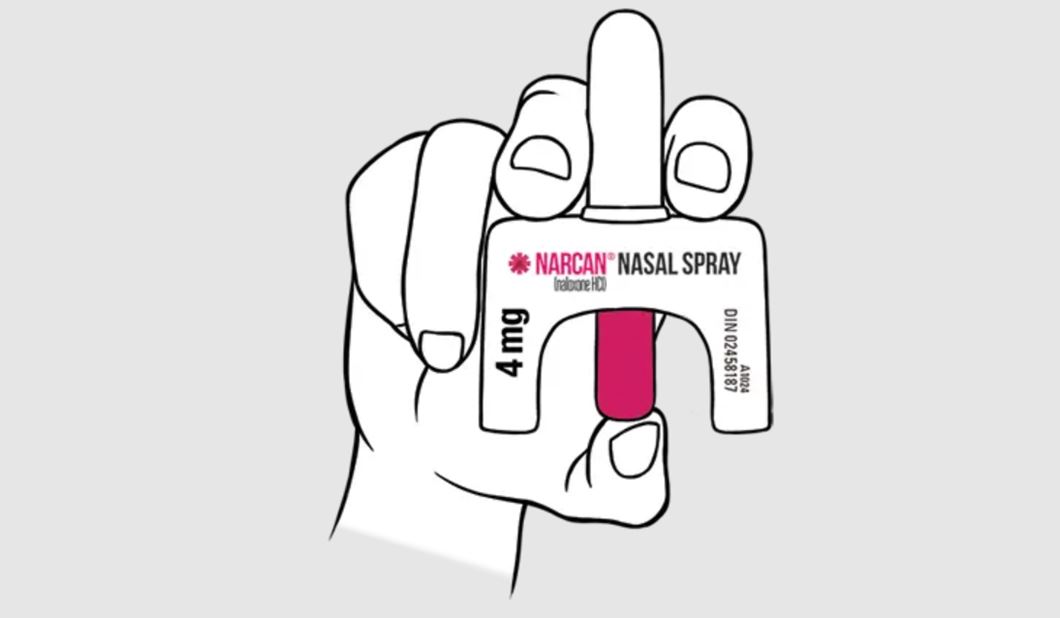
Students have the opportunity to learn how to save lives by learning how to administer Narcan, which is an over-the-counter naloxone nasal spray used to reverse opioid overdoses. Clubs and organizations at Butler frequently partner with Overdose Lifeline, a non-profit organization aimed at bringing awareness and helping people affected by substance use disorder. On Feb. 19, the Pre-Medical Society will host its first Narcan training event.
At the training, a team member from Overdose Lifeline will teach students, faculty and staff about substance use disorder, how to identify an overdose and how to administer Narcan.
Justin Phillips, the CEO and founder of Overdose Lifeline, believes that it is important for college students to be educated on drug use and overdose. She makes an effort to continuously collaborate with Greek Life, clubs and other organizations on campus.
“We hope, when we do this training, to get everyone on the same page around the basic understanding of what happens when you introduce substances to your brain, the changes that occur,” Phillips said. “[We discuss] the choice to use substances, diminishing the shame and stigma that comes from being someone who might be misusing substances, resources that are available, ways to get help, ways to find recovery and overdose prevention.”
While other clubs at the university have previously hosted similar events, the Pre-Medical Society is excited to host their first Narcan training.
Jeremy Huiet, a senior biology major and president of the Pre-Medical Society, believes that understanding substance use disorder and the signs of overdose is necessary for doctors.
“Depending on your specialty, you could be administering Narcan 10 times a day or not at all, but you may be called upon in a certain situation,” Huiet said. “In general, learning about every aspect possible in the medical field [is important for pre-medical students].”
Sophie Otto, a sophomore biology major, is the vice president of marketing for the Pre-Medical Society. She is excited that the training will go beyond Narcan administration to discuss substance use disorder and address the shame surrounding it.
“I think that it’s super important to hone in on beating that stigma at the same time, because it’s not negativity that’s going to bring people together [and] save lives,” Otto said. “It’s going to be that positivity that can change someone’s life completely.”
Phillips, Otto and Huiet agree that this kind of training is important amidst the ongoing opioid crisis. Currently, synthetic opioids pose a serious threat, as fentanyl is the most potent opioid available. It is the leading cause of drug overdose deaths in the United States.
“[Drug dealers] have been putting fentanyl, which is super deadly, into lots of other drugs that aren’t opioids and aren’t fentanyl related,” Phillips said. “They have fake pill presses, so they make a pill that looks just like a real Xanax, just like a real Adderall, and they sell it, and then it’s fentanyl, and you can overdose and die. Fentanyl can be in cocaine; fentanyl can be in almost every substance.”
Keely Roe, a junior biology and biochemistry double major, is the vice president of external affairs for the Pre-Medical Society. She also works as a pharmacy technician and explained that people can misuse their prescriptions.
Roe emphasized that, because of all of the risks associated with opioids, it is essential for everyone, not just doctors and EMTs, to know how to identify an overdose and administer Narcan.
“It’s something that we can all do,” Roe said. “It’s just like CPR. It’s great to know CPR, because you truly never know if someone’s going to have a heart attack [or] someone might drown. You never know when you can help someone in a way that is super impactful. Being able to use Narcan is like a modern version of that. It’s what we need to be able to deal with the current climate of the opioid crisis.”