
Overtime, or “OT,” is an opinion column series where the Collegian takes national sports headlines or polarizing topics and gives them a Butler-centric angle.
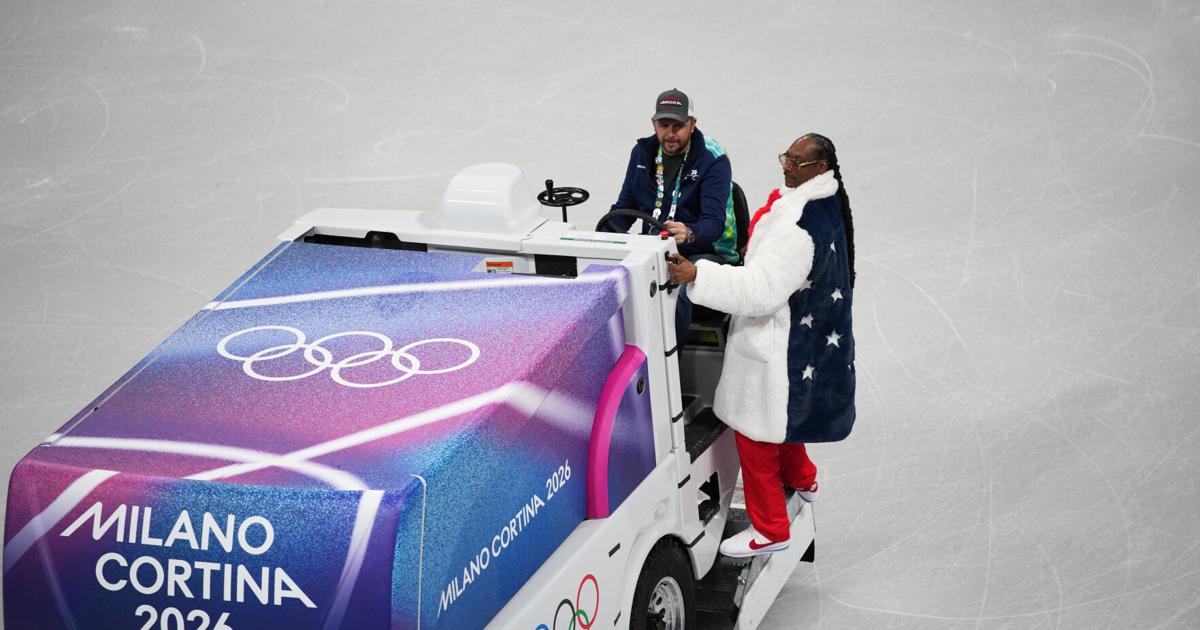
The sight of Snoop Dogg riding a zamboni across the Olympic figure skating rink was not something most viewers expected to associate with the international sporting stage. Yet, there he was, cruising around while serving as a host and honorary coach for Team USA at the 2026 Milano-Cortina Winter Olympics.
Snoop Dogg’s presence as an Olympic host is not just a gimmick; it is a clear signal of where sports media is headed, as the worlds of pop culture and sports are continuously becoming more and more blended.
However, the line between traditional sports broadcasters and celebrities has already been blurry for years.
Sophomore sports media major Michael Knobel points out that voices like Jim Nantz, Mike Tirico and Kirk Herbstreit have reached celebrity status not because of viral moments, but because of longevity and trust.
“Nantz is just a celebrity in terms of how historical he’s been,” Knobel said. “He has voiced the Masters and lots more. Tirico has been the face of NBC for the past 20 years. When you watch the Olympics, you’re watching him.”
In that sense, celebrities in sports media do not always mean famous outside the game — it can also mean being inseparable from it.
Former athletes like Tom Brady and Tony Romo have become prime examples of how celebrity and credibility can overlap. Knobel pointed to Romo’s early broadcasting success, when he would explain plays before they happened.
“When he would decipher an entire play, just kind of break things down from his own perspective, that was really cool,” Knobel said.
Former athlete commentary blends a strong balance of both fame and expertise, but today’s broadcasts are also actively importing fame from outside of sports and dropping it directly into the broadcast.
The sports world is making room for more of the fame-focused moments like Snoop Dogg joking about a horse crip-walking alongside comedian Kevin Hart during the Tokyo Olympics’ equestrian competition, actor Timothée Chalamet offering surprisingly sharp college football predictions and WWE star Seth Rollins appearing at the ESPN pregame table to share his own analysis as a Chicago Bears superfan.
Nick Gardner, Butler men’s basketball radio color commentator, was blunt about the motivation behind these fame-focused decisions: money. Networks are chasing younger demographics, new markets and broader appeal. Celebrity presence outside of the sports realm helps open doors to new audiences that traditional broadcasts may never reach.
“Networks are just trying to get more eyes on whatever it is they’re doing,” Gardner said. “That’s going to bring more dollars.”
However, Gardner also recognizes where tensions arise, particularly among diehard fans.
“The negative is when you’ve got the super hardcore fan who wants to get nerdy about the sports stuff,” Gardner said. “Then, they’re getting the fluff of the celebrity commentator that’s just trying to grab new eyes for the sport.”
This tension becomes even more apparent when broadcasts lean too heavily into the sports-culture spectacle. Knobel pointed to ESPN’s animated alternate broadcasts — including games featuring SpongeBob and Monsters, Inc. characters — as examples of sports-culture innovation gone too far.
“I didn’t know what was going on,” Knobel said. “It’s like Sully, from ‘Monsters, Inc.’, ended up with 20 tackles, five sacks and 200 yards total on offense because they said every single big play with only Sully’s name. Then I’m like, ‘I don’t know in real life, who made this big play?’ For me, as a big fancy football guy, I can’t watch that. I want to actually know who actually made that play.”
For newer or more casual viewers, those same broadcasts can serve as an entry point.
First-year sports media major Calleigh O’Connor views pop culture involvement in sports as a way to make broadcasts more accessible and engaging.
“It sparks engagement and excitement from fans,” O’Connor said. “It makes them feel connected because it’s a new way to ease into the sport with familiar faces.”
O’Connor also pointed to figures like Taylor Swift as examples of how pop culture can drive interest in sports. While many viewers may tune in for the celebrity, they often stay for the game — a pattern leagues are increasingly betting on.
“I think people are like, ‘Okay, I’m gonna watch it just for the show,’ but then they watch the whole thing,” O’Connor said. “Then they’re like, ‘Oh, I’m gonna watch next season.’”
The collision of sports and culture is bringing in new audiences and new engagement. However, just like Snoop Dogg’s lyric — “With my mind on my money and my money on my mind” — sports media ultimately have their focus fixed on one thing with these celebrity appearances.