
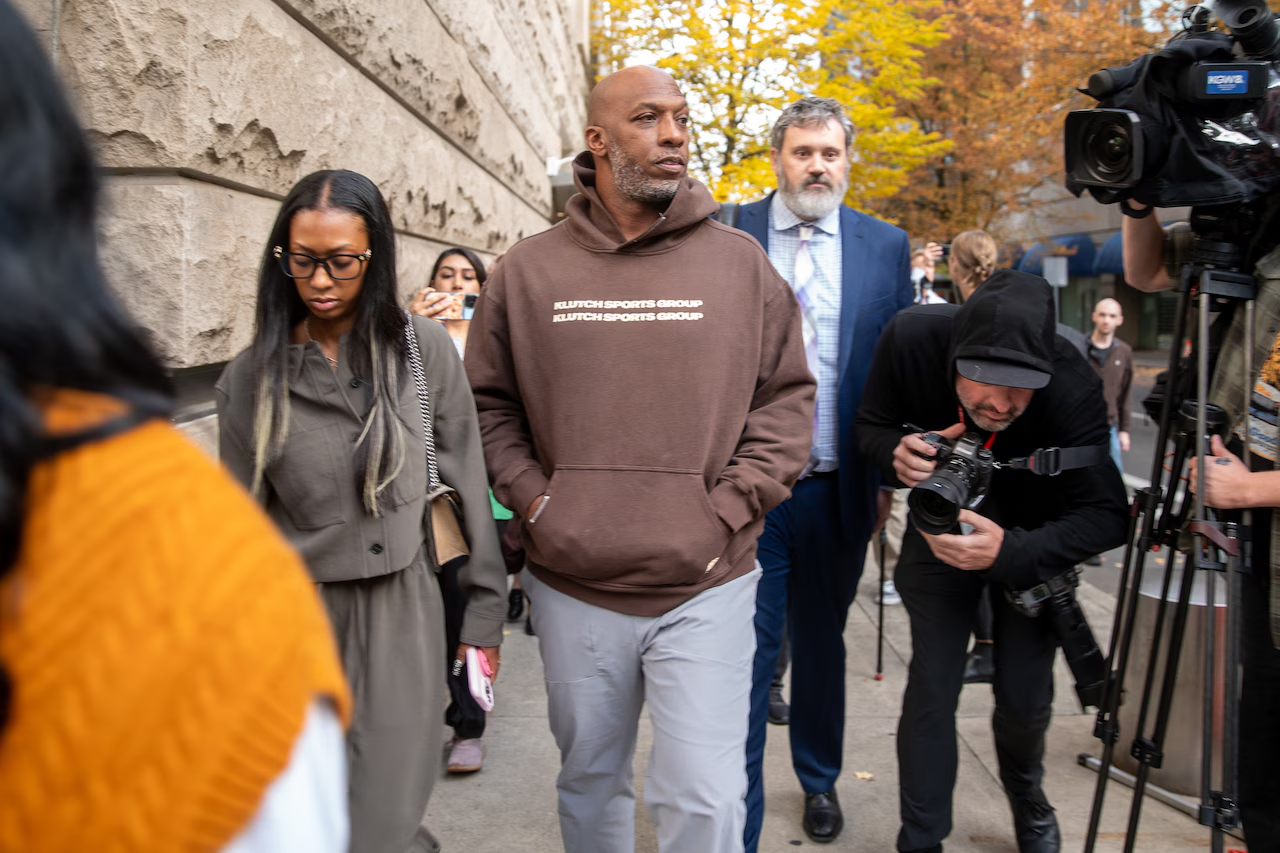
Portland Trail Blazers’ Head Coach Chauncey Billups was arrested in Oregon on charges of wire fraud conspiracy and money laundering conspiracy. Photo courtesy of Oregon Today.
AIDEN CADDELL | STAFF REPORTER | acaddell@butler.edu
The NBA — proudly sponsored by sportsbooks FanDuel and DraftKings — recently had a current player, coach and former coach indicted on federal charges surrounding illegal gambling.
In a shocking turn of events, the public was awakened on Oct. 23 to the FBI’s investigation of Miami Heat guard Terry Rozier, current Portland Trailblazers head coach Chauncey Billups and former Cleveland Cavaliers player and assistant coach Damon Jones using their positions and information as league insiders to illegally gamble on games they were playing or coaching in.
To make some extra money on the side, the men allegedly provided outsiders with private information to get a head start on betting for or against a certain squad. For example, in a game in February of 2023, Jones was accused of informing a co-conspirator in the case that star forward LeBron James would miss the game due to injury, something the public was unaware of. The outsider bet big against Los Angeles, and sure enough, the LeBron-less Lakers fell to the Bucks.
First-year sports media major Dennis Stowell loves the NBA, but feels that the league’s reputation has been diminished over the years. That phenomenon is only emphasized by recent allegations.
“I feel like the NBA has always had something to hide,” Stowell said. “If you have certain connections, you can make a lot more money [than from a contract.]”
In the case of Rozier, the FBI alleges that he told others to place bets for his “unders” on prop bets in regards to the Heat guard’s statistical output for the night. Here is the kicker: Rozier took himself out of the game in the first quarter due to an “injury concern” and did not return, assuring that an alleged $260,000 of shady bets placed would become successful.
Billups’ accusations span from disclosing unfair insider information all the way to stealing an alleged $100,000 in rigged poker games away from the court.
Counting former Toronto Raptors forward Jontay Porter — who is banned from the NBA for life — these allegations bring the number of people accused of gambling illegally in the league in recent years to four.
A question must be asked: Are these incidents truly the fault of the guilty parties, or can some fault be attributed to the league and sporting world itself, where gambling is promoted so heavily?
Since the Supreme Court rescinded the Amateur Sports Protection Act — which made it unlawful for states to allow betting on sports — in May of 2018, 39 states and two American territories have legalized sports gambling.
Since the legalization of the practice, gambling has taken over the sports broadcast and advertising world. The NBA itself has a partnership with two sportsbooks. Sports media titan ESPN has since launched its own sports betting site, ESPN Bet, and therefore has promoted it across its broadcasts and publications nationwide.
It seems as if the sports world has forgotten that gambling is a highly addictive practice. With about 2.5 million people across the nation meeting the criteria of having a mild to severe gambling addiction, this is something that simply cannot be as celebrated and normalized across the league if the expectation is that illegal gambling will not occur.
Sophomore sports media major Jackson Roemer believes gambling addiction needs to be taken more seriously by the general public, and disagrees with the NBA’s spotlight on sports bets.
“Within the league itself, [gambling] should go back to being taboo,” Roemer said. “I don’t think the league should be promoting it.”
If the NBA places its trust in the integrity of its competition, like league commissioner Adam Silver says it does, then it’s purely hypocritical of them to promote a way for the league’s product to be tarnished by sports betting.
Sophomore sports media major Kaleb Leiken wants the league to have the backs of its players, stopping these incidents from happening at its core rather than with strict punishment.
“At the end of the day, athletes are human too,” Leiken said. “They have mental health problems as well. We need to give them more support so that they don’t make these mistakes. We need to see an initiative to give athletes real support, so that they don’t go down a path where they feel the only way is betting on their team playing worse to get some more income.”


