
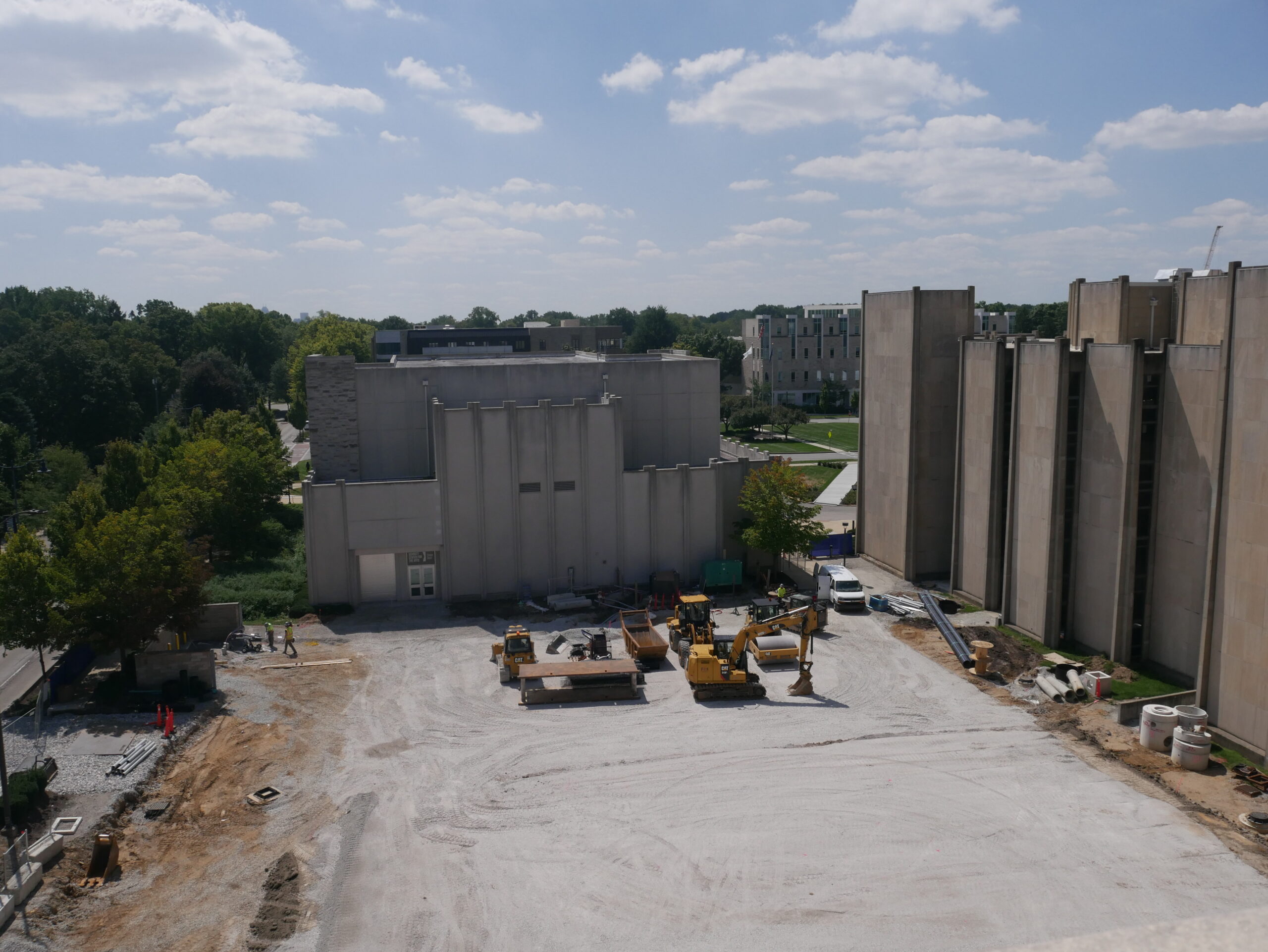
Butler students returning to campus may notice significant developments with the ongoing construction of the Allen Whitehill Clowes Ballroom and the Safety and Transit Hub. Both initiatives are part of the Butler Gateway Project, a strategy to upgrade Butler’s campus and connectivity with the surrounding community through new projects.
Ground was broken for the Safety and Transit Hub on South Campus in April. The project will result in a seven-story parking garage and the new home of the Butler University Police Department, as well as a collective point of welcome for the university. Construction of the Whitehill Clowes Ballroom — a multipurpose facility for entertainment events — was started on June 4.
Rusty Vineyard, Butler’s assistant vice president of facilities and operations, explained how his role connects to the larger mission behind the projects that work as the foundation for the Gateway Project.
“My job is to help [project managers] facilitate information so that I can keep our administration and general campus in the loop,” Vineyard said. “Our goal is to try to bring buildings and projects that are going to elevate the student, faculty, staff and constituent experience here on campus.”
Part of Butler’s Gateway Project includes a vision of an updated Midtown Arts District, set to bring an increased cultural vitality to Butler’s Campus. Clowes Memorial Hall is poised to be the center of the project, with the ballroom development included in the first phase of the project.
The ballroom construction is occurring on the east side of Clowes Memorial Hall, resulting in a large area, including sidewalks, being closed off.
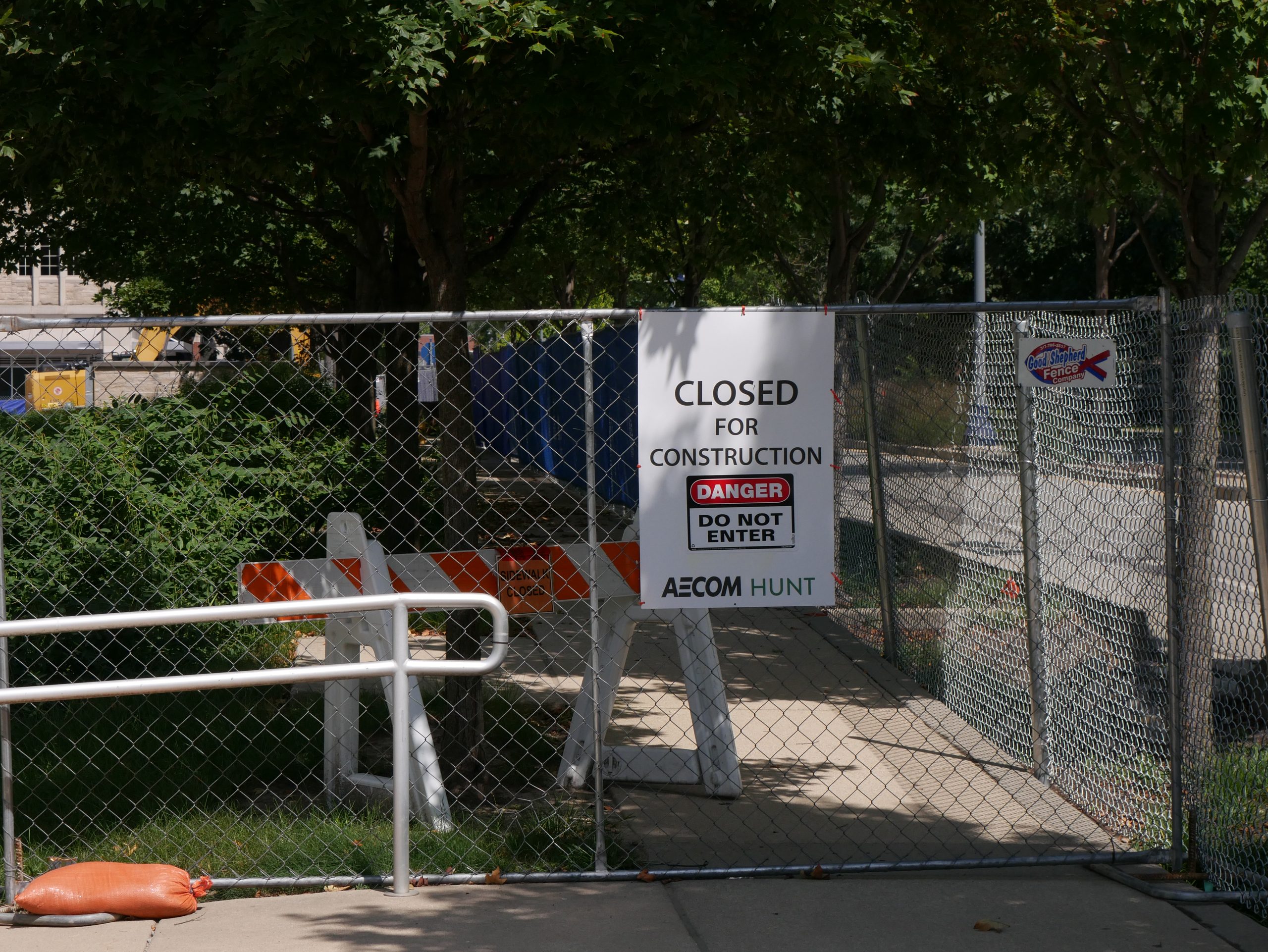
The developments have become a source of frustration for several students, especially those who live close to the construction and have experienced disruption to their campus commutes and daily life.
Senior political science major Andrew Carles recalled several instances in which the ballroom construction activity caused his senior house on Sunset Avenue to shake, once even waking him up. He expressed his annoyance with the development and the issues it has caused.
“I don’t really know why we need to have a ballroom,” Carles said. “Walking to class — because they closed one of the sidewalks — it’s been very congested.”
Junior secondary education major Mila Kvasnicka has experienced her fair share of frustration with the construction while living in South Campus Apartments, specifically in terms of accessibility and safety when walking to the main part of campus.
“I appreciate that they’re trying to make more parking, I really am,” Kvasnicka said. “I think it’s better for school morale, but I will say I have a little bit of beef with [Butler for the disruptions].”
Kvasnicka noted the personal difficulties she has had walking back to her apartment in the dark and expressed worries about what the commute will be like in the winter.
“We’re walking on plywood and gravel — there’s no direct path — so you’re crossing the street multiple times,” Kvasnicka said. “If you’re not crossing the street, you’re walking on the road right next to cars. The reason that there’s a sidewalk [typically] in place is so you don’t get hurt or run over.”
Vineyard acknowledged the major concerns surrounding campus accessibility.
“We’ve been working closely with [Student Disability Services] here on campus to make sure that we’re staying on top of having clear pathways [and] minimal obstructions,” Vineyard said. “As they come to our attention, we’re working through them. As new pathways need to be created and/or cleared, we’re doing our best to work [on] that.”
The ballroom project is set to be completed in November 2027, and the completion of the Safety and Transit Hub in July 2027.