
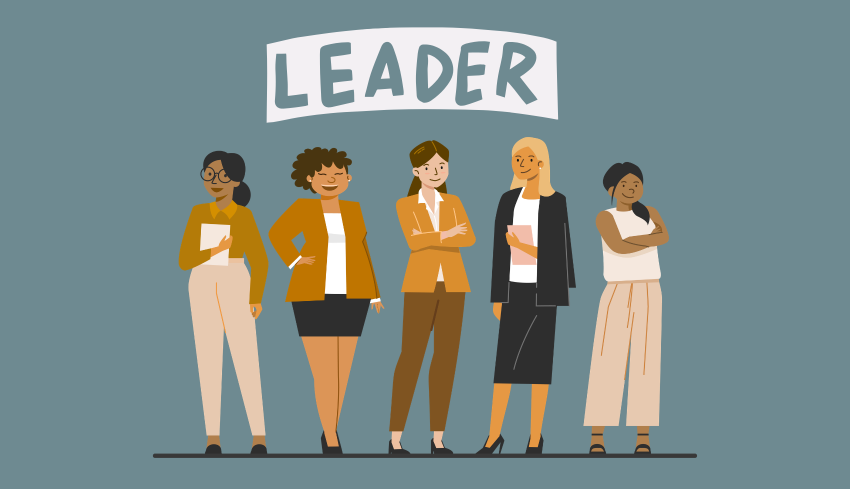
Our student campus demographic is dominated by women. Overall, more women are going to college than men, but men fill our school’s executive positions, like the Board of Trustees. Women aren’t being accurately represented, yet we are here pushing boundaries, being the majority at colleges, and hopefully, soon we will be the majority in other important positions.
At Butler, women’s voices aren’t accurately represented, with dominating numbers in classrooms but low amounts in decision-making meetings; we aren’t correctly heard. Women deserve positions of leadership.
Rachel Joyce, a sophomore creative writing and psychology double major and professional development coordinator of Leading Women of Tomorrow, commented on why women should be leading just as much as our male counterparts.
“I think it’s so incredibly valuable because it is so normal, or it should be normal,” Joyce said. “I don’t necessarily put it on a pedestal, I just see it as breathing or eating. It should be common, it should be something that isn’t even questioned. Now more than ever, it’s important to bring attention to it and emphasize the need for women in leadership.”
Females for centuries have been leaders, but not in humans. We see dominance in females across species. Orca whales live in a matrilineal system, with the oldest females leading and guiding their pod. Bonobos, a primate, live in sisterhoods, dominating the community. Bees are run by a queen, with her workers all coming together for the hive.
Humans, orcas and primates are among the only species that experience menopause, where the female can no longer procreate; they become informative figures, described by the Grandmother Effect. In most menopausal species, females play an equal, if not a large part, in their communities. But humans haven’t followed this pattern for most of our existence; women haven’t had significant roles in society, as we are just getting started.
Professor of biology Dr. Hilary Madinger described the selflessness seen across species.
“There are these species where we characterize them as being eusocial,” Madinger said. “The animals act in ways that are beneficial to the group, not necessarily beneficial solely to themselves. For a long time, people were thinking, ‘maybe animals don’t behave this way,’ but we find a variety of examples where our evidence suggests that animals do behave in a way that is best for the group.”
Humans are sometimes eusocial; we work together to get things done, build each other up and create and develop the world around us. Women especially work to push past boundaries and make change.
When women are in leadership positions at workplaces, there is a higher level of job satisfaction, more organizational dedication, more meaningful work and typically less burnout. If anything, we need more women in leadership to make things happen in a more efficient and enjoyable way.
Yet, despite all of this, women still lack roles and responsibilities within higher-level leadership positions. We still lack agency, especially at Butler. Women fill caring and communicative roles, for example, HR positions, professors, nurses or advisors, but lack administrative roles.
Our campus is filled with women, but when we look at where important decisions are being made, our voices are not being acknowledged or accurately heard. Women at Butler are the majority, and their voices deserve to be heard. We need more women in power. Not because we deserve it, but we are just as capable as men if not more.
We should be leaders, not because orca whales are matriarchal, bees work together or bonobos live in sisterhoods. It’s because it’s natural to be a woman and to be in power, to lead and to have agency. It’s normal to be a queen bee, or a part of the first sorority, the Bonobo sisterhood or to be like those old orca females leading the way and telling stories like our grandmothers. It’s natural for women to lead, teach, guide and be part of something — just as it’s natural for men to do those same things.
Butler is filled with incredible women, whether it’s the students, professors or those in administrative roles, we are creating a better and different world.
Professor of history Dr. Vivian Deno expressed inspiring words for undergraduate women at Butler.
“The undergraduate women at Butler are going to change the world,” Deno said. “They are smart, they’re fierce, they are beyond capable. They simply have to get out of their own way and not default to men either in the classroom or in leadership positions. We know that Butler women, when we look at their statistical background when they’re coming here, they are incredibly accomplished, and they have to lean into that and take really great pride in what they have already achieved, but also what’s ahead of them.”
The women studying here are going to become doctors, actresses, lawyers, writers, pharmacists, businesswomen, artists, engineers, journalists, teachers, dancers and so much more. Though men might be in lots of higher positions now, one day so will we. Just give us a few years to graduate, and we will change those statistics. Soon we will be leading too, just like those orcas in the ocean.