
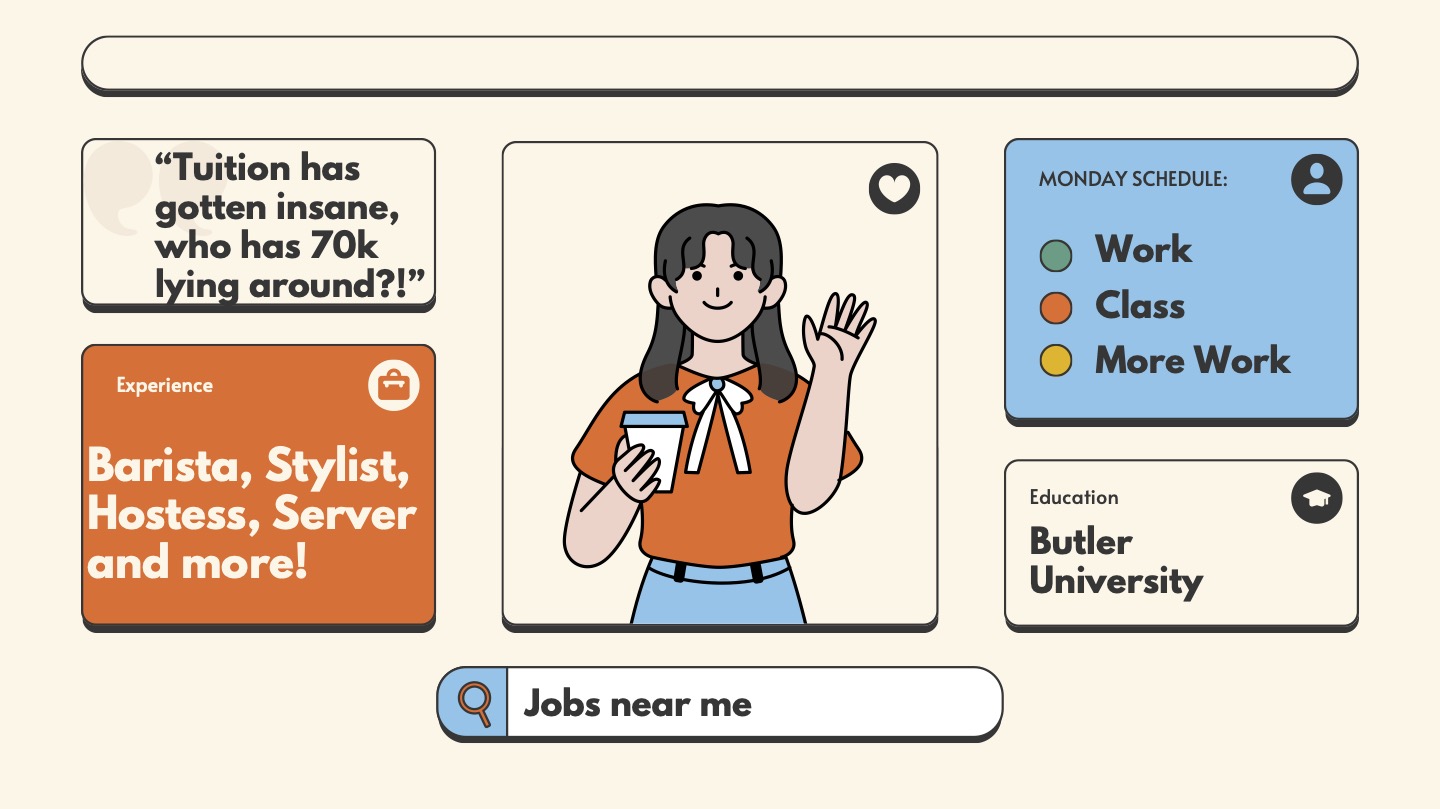
Imagine the possibilities $70,000 could give you. You could have a fancy new car, a down payment on a house, a motor yacht, 35 iPhone Duos or not even be able to afford just one year of tuition at some American universities.
This past year, Butler University raised its tuition by over $2,000 per semester for full-time students. This raise makes attending Butler nearly $75,000 a year, not including the over $5,000 summer housing fee, up to $310 parking fee, fraternity and sorority dues, textbooks and, unfortunately, so much more.
Tuition increases, on top of so many extra school costs, have made attending university financially exhausting.
Minimum wage in the state of Indiana has been stuck at $7.25 an hour since July 2009. If you do the math, $7.25 an hour for even 40 hours a week during the semester would not nearly be enough to even cover the cost to live in the Fairview shared dorms, which is $5,015 per semester for a regular double.
Sophomore elementary education major Desiree Stubbs commented on Butler’s use of the money that they receive from students’ tuition.
“I don’t really know what all they did with the money [from the tuition increase],” Stubbs said. “The only thing that’s different is A-Town [Cafe], and I guess it looks nicer, but the food is still the same.”
Maintaining a full-time student schedule on top of working one or more jobs to help keep yourself afloat is draining. Students shouldn’t have to worry about waking up for a 6 a.m. job when they have piles of homework and classes from 12-9 p.m.
Sophomore speech pathology major Leslie Fuentes shared her opinion on how having a job has affected her sleep schedule and overall quality of life.
“It’s exhausting,” Fuentes said. “I go to classes all day and study all the time, then I still have to wake up early for work. It’s mentally draining, but with how much school costs now, having a job is a necessity.”
Paying so much over the course of four or more years for students has started to become unreasonable. Student loans are rising to the point where some are still making payments decades after graduation.
Sophomore health sciences major Chloe Shadiow gave her thoughts on the cost of living for college students.
“At first I didn’t think that I was going to choose Butler because of how expensive it is, but thankfully I received a good scholarship from the school so at the time it was a wise decision for me,” Shadiow said. “Except now they have raised tuition so much that it’s just not making sense to me financially anymore.”
Some students even need multiple jobs both on and off campus to support themselves and their studies, making burnout common and stress and exhaustion almost impossible to avoid.
“I do feel like I need to have that other source of income just to keep up with the living costs of being a student in college,” Shadiow said.
Even with larger scholarships, FAFSA funding and multiple jobs, American colleges and universities are becoming a more and more unattainable goal for so many families. It is a sad reality of what universities are becoming, considering education is such an important aspect of a young adult’s life, and educating younger generations is a vital part of society. Butler offers quality degrees in hundreds of different fields, but is it worth the $300,000?