
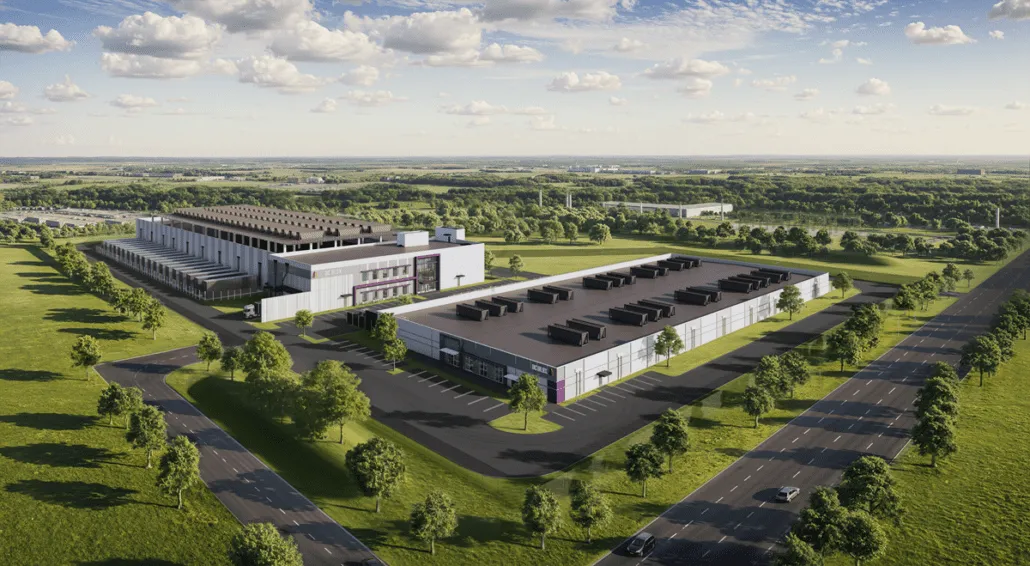
Volunteer organization Eastside Community Action (ECA) canvassed the Irvington Historic District in Indianapolis to spread information about the new DC BLOX data center on Sept. 5. The center, approved by the Metropolitan Development Commission on July 15, will be built across the street from Irvington Community Elementary School on Pennsy Trail, about 22 minutes southeast of Butler’s campus.
Construction of the project is split into two phases and is expected to take five years to complete. However, the local community has raised several concerns regarding the center, starting with the location itself.
Rex Riddle has lived in Irvington for five years and has been volunteering with ECA since June.
“The most imminent danger to our neighborhood is that they’re going to be constructing it on a brownfield,” Riddle said. “There’s more and more coming out about how bad the soil is over there. As soon as they start construction, that will start kicking up dust and that’s going to drift wherever the wind’s going.”
Brownfield is a term used by environmental organizations to describe a piece of real estate that is abandoned or inactive and which redevelopment is complicated by the presence of substances that may be hazardous to human health. Thunderbird Commerce Center, the former home of a Ford manufacturing plant and site for the new data center, is classified as a brownfield.
“The most pressing concern is that all that construction dust is going to blow right onto the elementary school and it’s polluted,” Riddle said. “Effects would not immediately be seen in students; they would have to do a study and see how that’ll impact their lives going forward. It’s a very insidious thing, that [children] could be getting harmed without even knowing.”
DC BLOX has committed to following environmental standards and operational guidelines as set out by the Indiana Department of Environmental Management (IDEM) in the Supplemental Environmental Letter to the MDC Hearing Examiner. Additional information is available in the Statement of Commitments submitted by DC BLOX to Marion County.
Concerns aren’t limited to the construction of the center; they also extend to when the site will be operational.
Jackson Clarke joined ECA nine weeks ago after speaking at a community event against data centers.
“There’s going to be noise and light pollution 24/7,” Clarke said. “At all times, 65 decibels of noise [will be] coming from there.”
The 65-decibel sound level, a limitation on sound level for everyday operation, is the same limitation set on the Hyperscale Data Center in Dowagiac, Michigan. That site has received multiple complaints from nearby residents in the years it’s been in operation.
“We’re standing about half a mile away from the site; we’d probably be able to hear it from here,” Riddle said. “There’s no break from the [noise], it’s just [there] all the time.”
DC BLOX is required to test sound levels at least once a year, and within two months of a complaint being submitted.
Some local business owners are concerned about how it may affect their business.
Jamie Willis and her wife, Deb Kent, own two local businesses: Gallery of Homes Real Estate and Magpie Artspace.
“As realtors, we worry about property values,” Willis said. “People’s biggest investment is the homes that they buy. So [for] our neighbors and clients — whom we really love and care about — we don’t want to see their property values go down.”
While the Irvington data center is closer to downtown Indianapolis, data centers have been a worry for local communities across all of Indiana, particularly in areas that are already experiencing economic or financial issues.
Sophia McKinley, a sophomore political science and philosophy double major, is from Kokomo, another community that has been fighting against a new data center for over a year.
“I come from a more rural area, so the amount of water [data centers] take up, the way they affect electricity bills, that [is] a huge concern for me,” McKinley said. “I know that so many people I grew up with do not have the finances to deal with that sort of thing.”
The impact on routine bills can be significant. Consumer Reports found that data centers, combined with aging power grids and general inflation, caused electricity prices to jump 7.1% nationwide.
“I knew so many people that grew up on food stamps, and there were times I would have friends stay with us for weeks at a time because it was winter and they don’t have heating in their house,” McKinley said. “It’s concerning and scary that there will be a lot of people that’ll fall through the cracks more than they already do.”
DC BLOX maintains that the Irvington data center will create new opportunities for skilled employment, stimulate economic growth and that they actively engage with local stakeholders to ensure their presence contributes positively to the communities they serve. They have also committed to contributing at least $20,000 a year for five years to the Pennsy Trail.
While the building is not included in the Aug. 19 moratorium on new data center projects, Irvington residents Madison Monfreda and Megan Lapa, Irvington Community Schools and ECA have filed a petition for judicial review of the zoning decision. The ECA has also filed a request for a stay on the project until judicial review is completed.