
At any concert today, you’re likely to have a phone blocking your view of your favorite artist performing.
Phone dependency has gotten so out of hand that people can’t live in the moment, especially within social settings. Recently, artists such as Phoebe Bridgers have banned phones and other technologies at their concerts. It’s a beautifully executed idea that forces people to live in the moment. If you are willing to pay to see music live, maybe start paying attention, and you’ll have a better time.
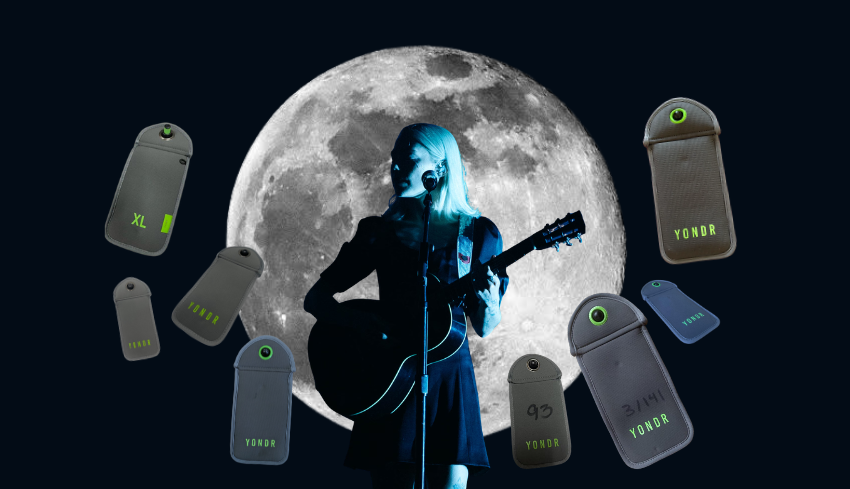
The Lost Weekend Tour, which has followed Bridgers since her new album was released, started on Sept. 14, 2026, at Gainbridge Fieldhouse in Indianapolis. Bridgers enforces a strict no-phone policy where attendees must put all devices into locked Yondr pouches that are only to be opened at the end of the show. Anyone caught with a device can be escorted out of the venue.
This policy is in place because Bridgers wanted to foster a community and a chance to connect with her fans. Bridgers also encourages the fans to live in the moment in order to promote a distraction-free connection with the art that is being produced on the stage. After going to night two of the Lost tour, I found myself reflecting on how amazing it felt to not have the burden of a phone notifying me every second.
Samantha Schoenke, a sophomore criminology and psychology double major, reflected on her no-phone experience during the concert.
“I was happy that I could genuinely just not have to worry about pulling out my phone to record just because I feel like I should, and I was just able to enjoy it,” Schoenke said. “You can pull out your phone at any time during the day and watch a music video, or go on Spotify. There’s no reason that we need to have our phones out, especially during a song that means a lot to you.”
The one distraction being locked up is such a freeing feeling because you finally have no temptation to record, or even look at annoying notifications. I do feel that half the time we record these moments in order to flaunt where we are on social media, or the seats we had. People always want to one-up each other, and recording at concerts is just one piece of evidence towards that.
Lizzy McAlpine’s The Over the Country Tour is coming to Clowes May 9, 2027, and Butler students are highly anticipated to see her perform, especially as her audience grows every year. During her last tour, she utilized the no-phone policy to make her concert more intimate and provide more connection between the crowd and the artist.
At the moment, no specific guidelines have been set for her new tour at Butler; however, her stance is pretty clear when it comes to recording her shows. McAlpine would rather the audience truly experience her art and actually engage with it. So, even if this rule is not brought to Clowes, try it out and leave your phone at home.
Mollie Maher, a junior strategic communication and journalism double major, explained her perspective on why people have a need to record concerts.
“You see everyone on their phone, and it’s just embarrassing,” Maher said. “Everyone’s sucked into their phone and more worried about getting the perfect video to post on their social media rather than being in the moment.”
The addiction to recording our lives is affecting how we interact with each other, and also with the world in general. I feel as though looking at concerts is a great way to view how addicted our phones really are. We are unable to connect with the artist because we want the perfect shot. At a point, it becomes performative.
Chad Bauman, a professor of religious studies and international studies, has a phone policy that he enacts in class where students are incentivized with 5% of their final grade; however, they have to be technology-free. Bauman votes on phone addiction and how technology can be a distraction.
“When you’re not allowed to use your phone, you are more present, you’re more engaged, you’re actually experiencing the whole thing,” Bauman said. “You’re experiencing the entire experience, everything around you, not just that one thing on the screen.”
Without my phone, I was able to watch and take in everything I was seeing. I got to interact with my friends more, and none of us were worried about what was going on outside the actual concert. The feeling of being completely away from outside the concert made the experience 10 times better.
Sometimes, these places need a clear policy for socializing with peers because when we are told no, that’s when we start paying attention.
With the power and money some of these artists have, they should consider this policy more. It creates a deeper connection with the fans, and it allows us to fully live in the moment.
So, if you find yourself going to a concert anytime soon, leave your phone at home, or turn it off. You will find yourself having a better time than getting a recording of something right in front of you.