
Overtime, or “OT,” is an opinion column series where the Collegian takes national sports headlines or polarizing topics and gives them a Butler-centric angle.
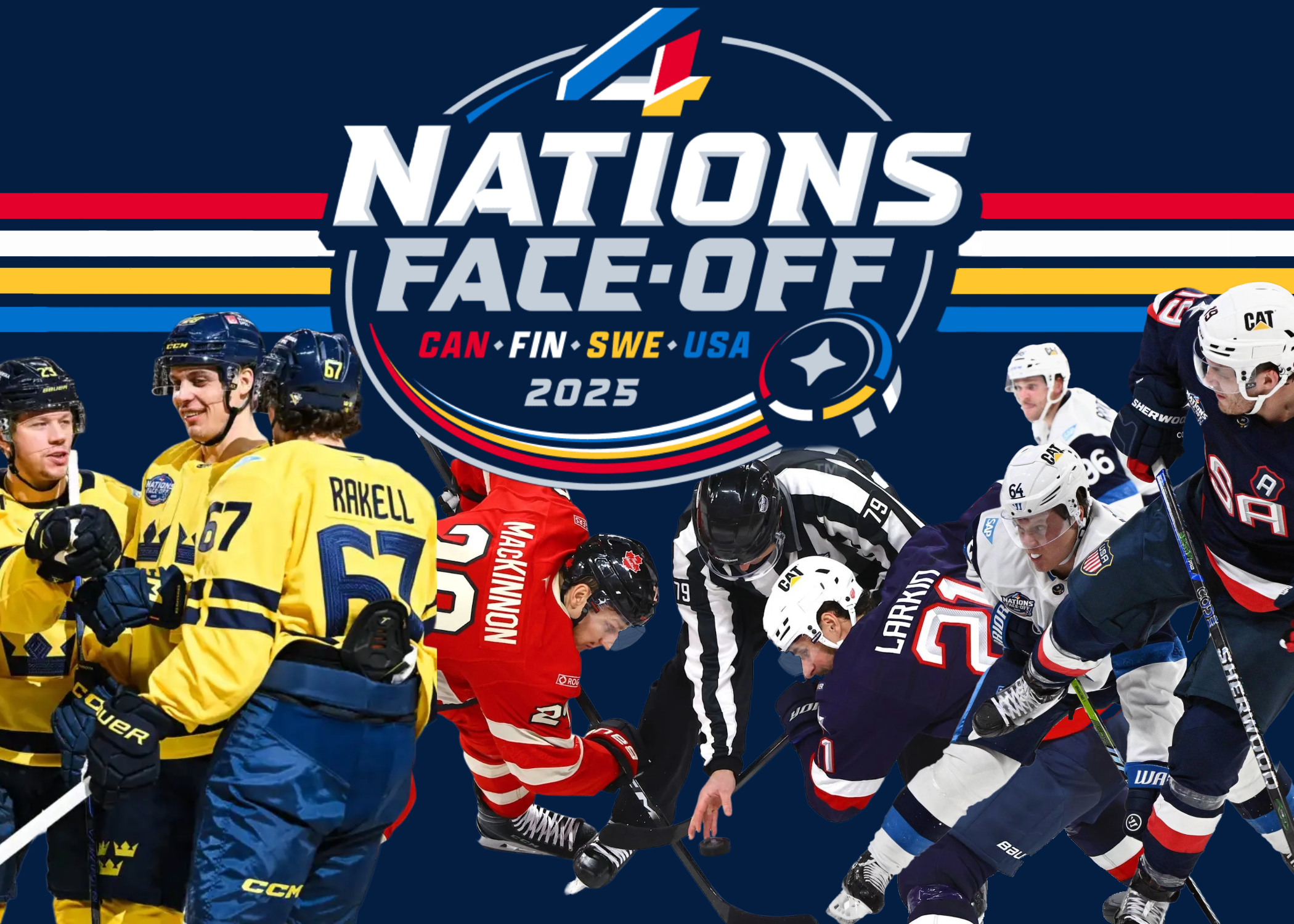
The National Hockey League (NHL) changed what all-star games could be when commissioner Gary Bettman announced that the 4 Nations Face-Off would take place from Feb. 12-20, 2025.
True to its name, the tournament featured four nations — Canada, the United States, Sweden and Finland — facing off in a round-robin format followed by a final between the two best teams. It replaced the traditional NHL All-Star Weekend, which featured a skills competition followed by a four-team, single-elimination tournament.
The final, which saw Canada triumph 3-2 over the United States in overtime, attracted 16.1 million viewers tuned in across North America. It became ESPN’s most viewed non-NFL game, and was the second-most watched hockey game in the last decade behind Game 7 of the 2024 Stanley Cup Finals.
The tournament came at a time when tensions between the United States and Canada were high, fueled by high tariffs and President Donald Trump’s claims to make Canada “the 51st state”.
With games split between Boston and Montréal, audience members in both stadiums booed the U.S. national anthem, and the Canadian anthem was even sung with different lyrics to protest Trump’s statements. After Canada’s victory, then-prime minister Justin Trudeau posted, “You can’t take our country — and you can’t take our game.”
With these tensions as the tournament’s backdrop, Americans and Canadians alike were full of pride for their countries, which is what makes international tournaments like the 4 Nations so popular.
Alexander Carter, PhD, assistant professor of strategic communication, believes that national pride not only plays a big part in engaging viewers, but it also motivates athletes to play harder.
“I think people really love when countries face off with each other,” Carter said. “Everyone wants to watch the World Cup; no one really cares as much about the Club World Cup in soccer. For the players, it’s [about] representing something bigger than yourself. For some of these guys, this may be their only opportunity to represent their nation. They may not make the Olympic team, they may not make any other sort of team. So this is their opportunity, really, to be the faces of their country.”
However, not every country was represented.
The 4 Nations was hosted by the NHL after the league failed to reach an agreement with the International Ice Hockey Federation (IIHF) — the governing body of ice hockey — which meant that only NHL players could participate. If a country did not have enough players in the league to field a roster, it was left out.
Germany, which was fourth in the 2023 IIHF rankings, did not have enough players. Russia was ranked third, but has been banned from international competitions by the IIHF since its invasion of Ukraine. Other nations in the top-10 that lacked players included Switzerland, Latvia and Slovakia.
On the other hand, Czechia had enough players, was eighth in the IIHF rankings and in good standing. Yet, it was not represented. David Pastrňák, a right wing for the Boston Bruins and Czechia, expressed frustration at his country being left out, but understood that the NHL had limited time to organize the tournament.
Greg Wyshynski, a senior NHL writer for ESPN, felt that the 4 Nations can not be considered a true best-on-best tournament if it does not have some of the league’s top players participating. Aside from Pastrňák, Edmonton Oilers center Leon Draisaitl, Washington Capitals left wing Alex Ovechkin and Nashville Predators defenseman Roman Josi were other notable exclusions from the tournament.
To incorporate more countries into the tournament, senior strategic communications major Cassia Campbell thinks that the NHL should have a rotating schedule for the four nations that will face off.
“I think it should be on a sliding schedule, like year-to-year,” Campbell said. “There’s such great hockey talent coming out of so many countries, like Russia is a huge one. [Pittsburgh Penguins center Evgeni Malkin] is Russian, and he’s one of the greatest players of all time. So I think it’s important to rotate it out and switch it up, and I think that’ll also draw more viewership, because people are going to want to see their favorite players [and] see their heritage and ethnicities represented by their country.”
Despite some of hockey’s biggest stars being left out, the 4 Nations had no trouble getting fans to watch.
While the old All-Star games never peaked above three million views, the United States’ first game against Finland in the 4 Nations drew in 1.69 million fans alone. That number is comparable to the 2024 All-Star Game, which garnered under 1.4 million views.
If the 4 Nations Face-Off was so successful, why not completely erase the All-Star Weekend?
The answer to that is novelty. The tournament was successful in part because it was new, flashy and exciting. If the NHL held it every year, fans could tire of watching players and nations compete again and again for a trophy that ultimately means nothing.
Junior sports media major AJ Marcinko would watch the 4 Nations if it were held every year, but thinks that the tournament could lose value if it happened so often.
“I watched almost every single game [last year]; even if the U.S. wasn’t playing, I still watched just because I love it,” Marcinko said. “But [they plan on holding it] every two years, not every year, and I think with that, the prestige of winning holds more value. Whereas if it’s every single year, would I still watch it? Yes. But I think in terms of [the] prestige of the competition, it’s just going to lose its value. I think a lot more people would like to watch that more, but I don’t think it’ll happen.”
The NBA faced a similar issue with its All-Star Weekend. While the views generally hovered around seven million, they took a big dip recently. After 2020’s game, which reached 7.28 million viewers, the number has fallen every year, with last year’s game only garnering 4.7 million views.
However, the league saw a huge leap in viewership this year, as the game peaked at nearly 10 million views — 87% higher than 2025 — and averaged 8.8 million views across NBC, Peacock and Telemundo. While part of the reason is the broadcaster, the league’s new format also attracted viewers.
The All-Star game had a similar feel to 4 Nations, with a team of international players — Team World — facing off against two teams of American players — USA Stars and USA Stripes. The three faced off in a round-robin format, with both U.S. teams meeting in the final game.
Carter preferred the new tournament format because it felt like the players cared more about the competition and played harder as a result.
“I like this format more because the game felt a little better,” Carter said. “It felt like the players tried a bit more. They did a similar thing the year before, [where] they [had] a team of young players [and] a team of old players, [but] it just didn’t feel as cool. Doing the Team USA versus the world felt a little [cooler]. I feel like those first three games were just a lot more fun, partly because I think the players cared a bit more.”
National pride, even on a small scale, draws in players and fans alike. The chance to represent your country is a large point of pride for athletes, especially when international tournaments like the Olympics are held every four years. For fans, the chance to see their nation win and prove themselves the best in the world is alluring enough to watch.
As hockey continues to grow in popularity, there is no doubt that the NHL will continue to hold best-on-best tournaments after the 4 Nations’ success. If the league can find a way to incorporate more countries in the future, then its fanbase will only continue to grow. For now, though, the same four nations will continue to face off.