
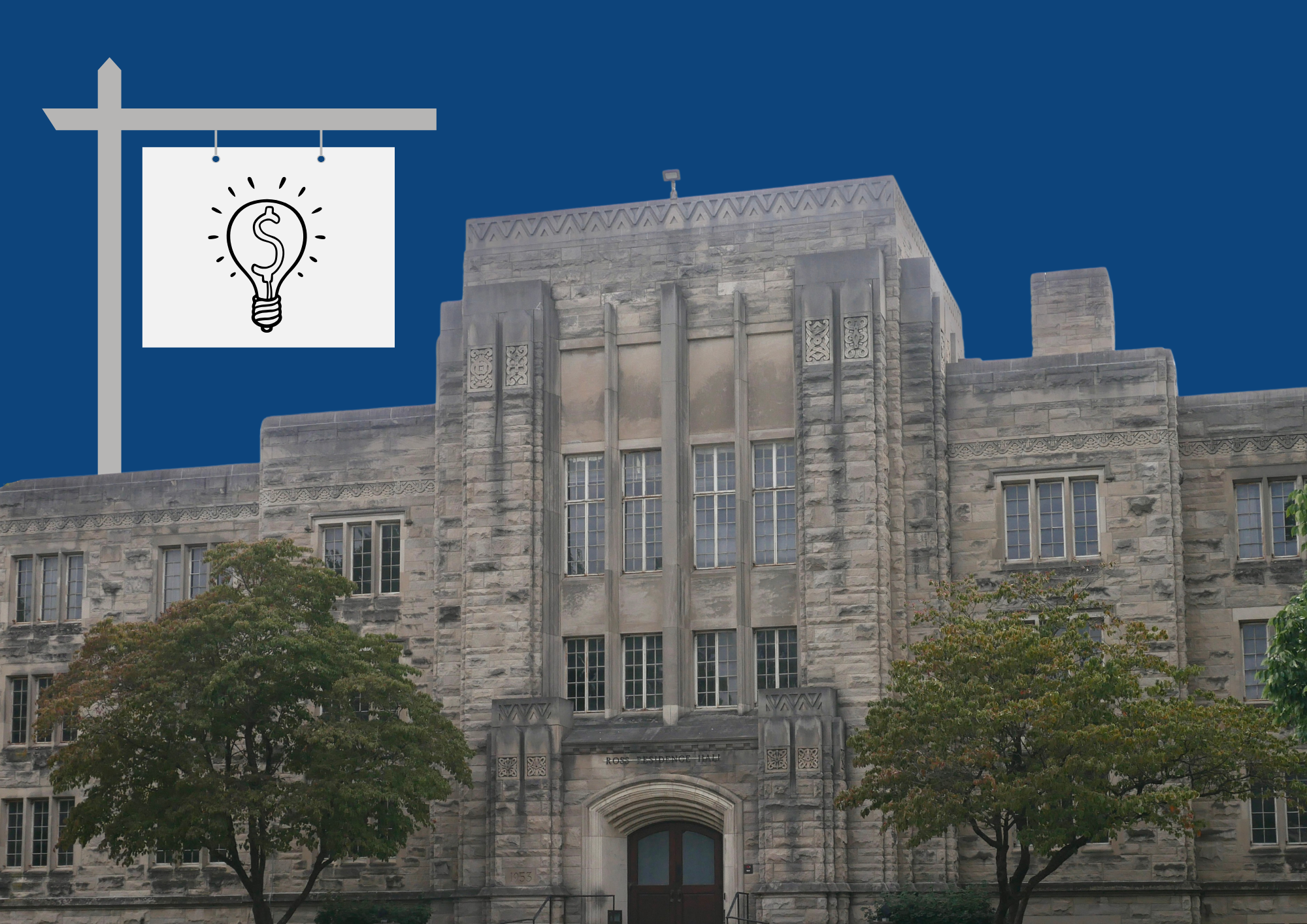
The Private Venture Association (PVA) and the Butler Real Estate Club are collaborating to host the Ross Hall Redevelopment Case Study — a competition of pitches offering redevelopment plans for Ross Hall that cover product, market and financials, with a first-place prize of $2,000. On Dec. 1, participants will pitch their ideas to a panel of judges who are real-world leaders in real estate.
The case study was established by Jack Weybright, a junior finance and entrepreneurship double major and the secretary of PVA — a business club at Butler that uses real-world experiences to develop entrepreneurship skills. Due to Weybright’s interest in real estate and a lack of opportunities to pursue it on Butler’s campus, he decided to partner with Gus Hansen, a senior finance and accounting major and the president of the Real Estate Club, to create the case study and competition.
Alan Finn, Butler’s executive chief operating officer and vice president for finance, is serving as one of the judges for the competition. Finn said Weybright reached out to him because of his involvement with facilities at Butler, which oversees Ross Hall.
Finn explained that the university facilities team has been engaging in conversations about what to do with the future of Ross Hall as part of the Gateway Project, since the original plan was not fulfilled — though Butler still owns the rights to the partnership with Hilton that was meant to turn the building into a hotel.
“We were exploring an opportunity with a developer, and it just didn’t work out,” Finn said. “Right now it’s just sort of sitting there until we figure out what to do with it again, unfortunately.”
Ross Hall closed as a university residence hall in 2019, and has sat empty since 2022. The Butler Collegian published an article earlier this semester regarding the building’s disuse and the plans that were announced, though they have not come to fruition.
Weybright mentioned that the appeal for involving Finn in the case study was to create an opportunity for students’ ideas for the abandoned building to be seriously considered.
“Maybe they’ll actually think about the students that did this competition and utilize that as part of the redevelopment plan,” Weybright said. “That would be my goal. I think that’d be cool. But that’s also why it’s a case study. It’s a study practice. It’s really to get students [to] be able to apply something [to the] real world without the risk.”
Finn shared that he is looking for student creativity and financial sustainability measures in the redevelopment pitches, emphasizing that money should be used for initiatives that support students’ lives on campus.
Hansen, the Real Estate Club president, also emphasized the element of creativity that is involved with an opportunity like this, and shared why he thinks students should be excited to participate.
“It’s a great thing to put on your resume,” Hansen said. “Getting involved in this, I think, is a great step if they want to explore that type of job opportunity.”
Registration for the competition closes Nov. 13. Second and third place prizes will also be awarded.