
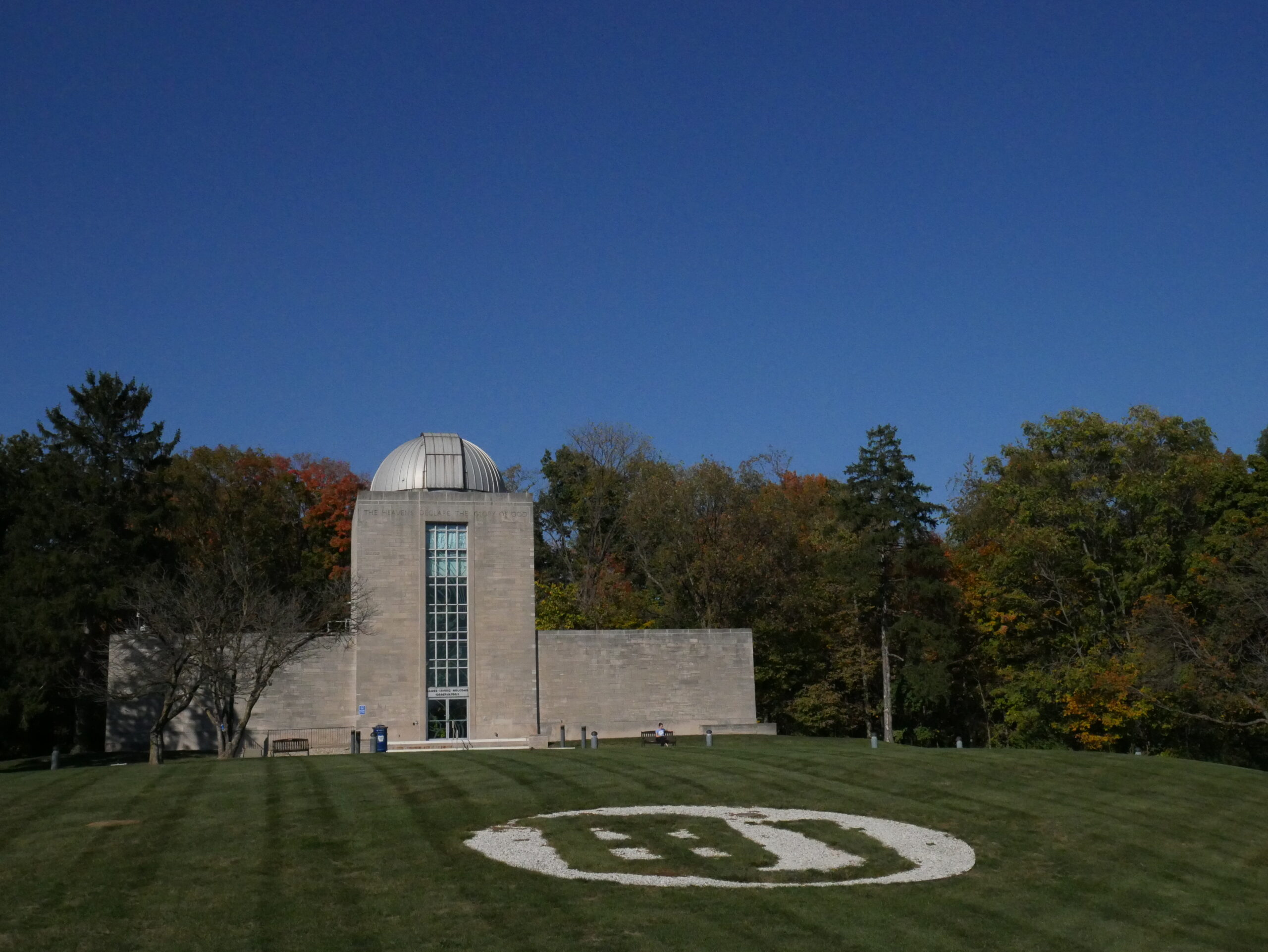
Departing from the Kennedy Space Center, Butler faculty and student researchers headed to the International Space Station (ISS) on Oct. 13, 2026. Butler University faculty and student researchers launched into space. This is one of five projects containing multiple compounds that have been sent to space in collaboration with Butler.
Chemistry professor Anne Wilson leads the experiments with students to test crystallization — specifically, how low gravity can influence properties of small organic molecules and drugs. The findings aim to inform crystallization-control strategies in space and how to alter certain crystal structures, which could further improve effective medical drugs and medical diagnostics.
Wilson said their findings suggest that, in space, crystallization is more malleable and easier to control.
“If you can alter the crystal forms so that they are more soluble and easier to deliver, then that can reduce the costs to produce particular drugs,” Wilson said. “We are finding that you can influence the forms of crystals if you grow them in space.”
The research team mainly consists of students who can test certain compounds, including pharmaceuticals like anti-inflammatories, GI tract medicine and simple medications such as Tylenol.
Students have been using Butler laboratories to test the crystallization process of these pharmaceutical compounds, which have been sent to space. They then continue their research from Butler, with data sent back from the ISS.
Joanna Rajkumar is a senior health sciences major and on the pre-PA track. She talked about her experience working on the research for two years and about going to a launch in August of 2025.
“I get a research credit, and I spend about an hour or two outside of my classes conducting experiments with my research partner,” Rajkumar said. “[Last year] we got flown out to Florida, and then the launch was at 2 a.m., so we got to go to NASA headquarters and see the launch from the VIP lounge. It was incredible.”
With the progress these experiments have made, the research has gained more opportunities from other companies that want to collaborate with Butler. These include NASA Voyager and Bio Orbit, who are hoping to continue and expand their current research.
Wilson explained the future goals of their research team and potential outcomes from the research they had already sent to the ISS.
“We have two more that are on the docket, then more after that; the manifests aren’t set at this point, but we know we are flying in December, and we are supposed to fly by the end of March,” Wilson said. “We’re hoping that a drug company is interested and wants to fly one of our compounds and use it to make a better drug for people.”
These potential outcomes could provide more effective, safer and easier-to-access pharmaceuticals. Data from the launch in October will be viewed and studied by the researchers at Butler in preparation for their launch coming up in December.
Miriam Garringer, a junior biology major, has been a part of the research team since her freshman year. She discussed how the research team has been beneficial for her life and for the future.
“Watching your research go up in a giant rocket on a fully funded trip is one of the most fantastic experiences ever,” Garringer said. “All of these projects are relevant, and we need to be studying them because the whole premise of the project is making pharmaceuticals better; we need to grow them so that they have better bioavailability, better cost and better absorption.”
Future information and research status regarding Butler’s space launches and future launches can be found on Butler’s official social media, specifically Facebook, the department and observatory websites and Butler Stories and Campus News.