
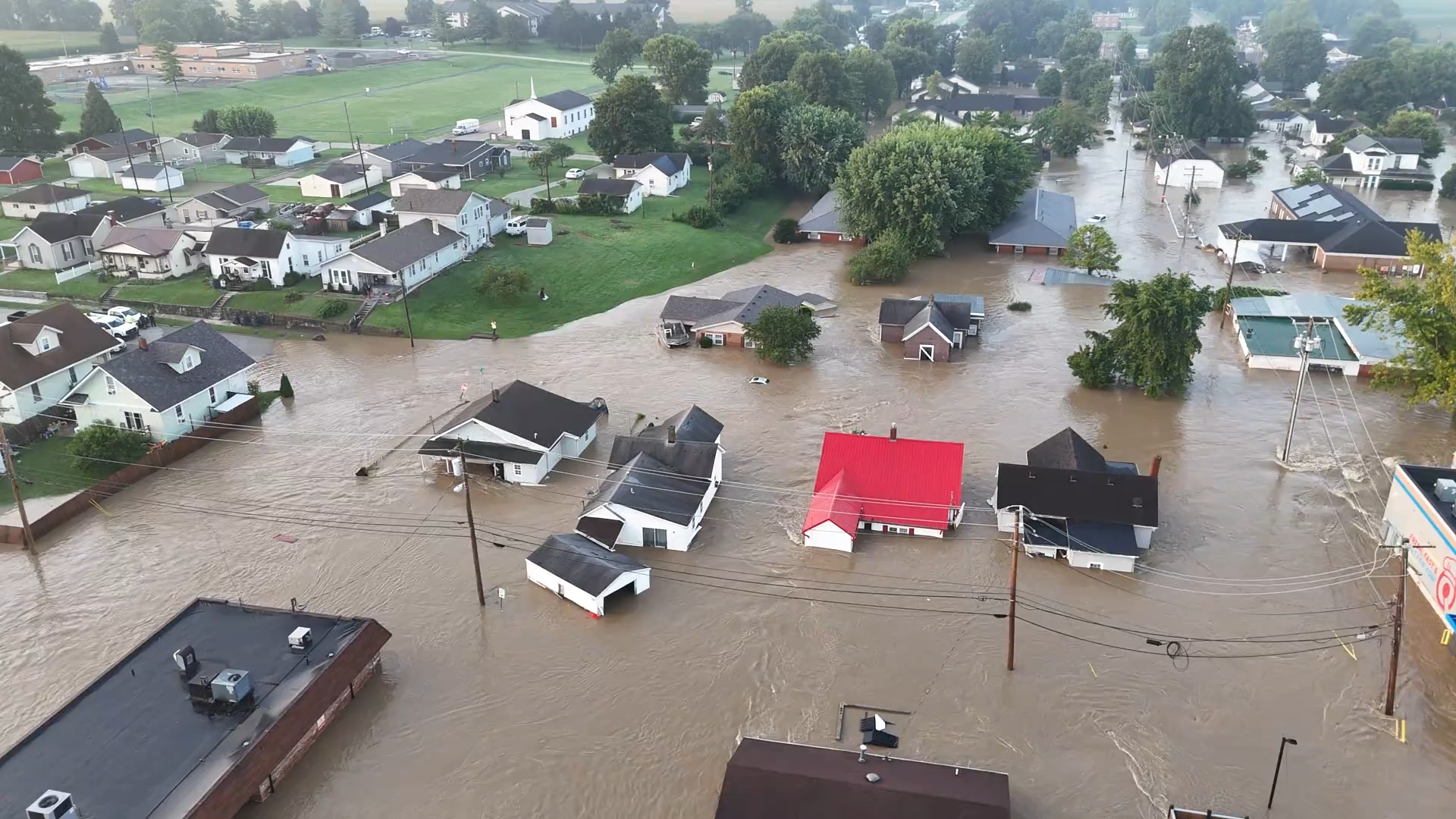
A powerful derecho — a far-traveling group of thunderstorms and straight-line winds — passed through Indiana on Aug. 11, with winds reaching over 100 miles per hour and resulting in record-breaking flooding. Three weeks after this powerful storm, many residents have just gotten their power back after weeks-long outages.
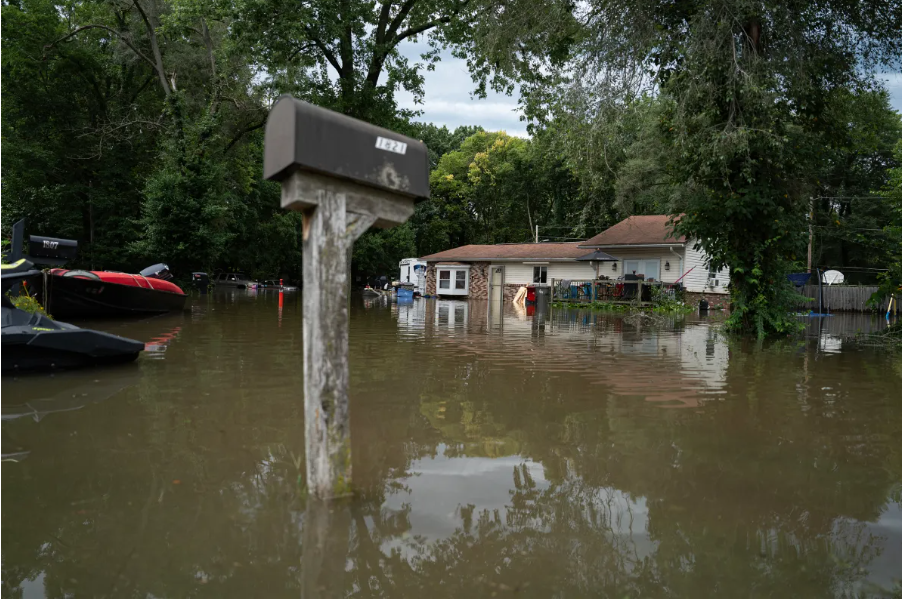
Sophomore biochemistry major Breck Terpstra is from a small town in northwest Indiana. He shared that his community experienced “a good amount” of flooding, but the majority of damage was caused by straight-line winds.
For Terpstra, the storm led to a days-long power outage. Despite the inconvenience of living without electricity, he said that he was one of the lucky ones.
“[My family was] only without power for about three and a half days,” Terpstra said. “Most people had their generators running, and for that period of time, it wasn’t too horrible.”
Many other Indiana residents were without power for a much longer time, some for as long as two weeks. A few residents are still lacking power three weeks later. Part of this devastation was brought by an EF2 tornado that traveled 26 miles from Illinois to Indiana.
Aleni Vasquez, a senior mechanical engineering and environmental studies dual major, was on Butler’s campus when the storm hit, but returned home to help her family with the aftermath.
“My brother’s basement flooded,” Vasquez said. “They had to buy an expensive generator and they have three young kids whose daycare was closed down because they had no power.”
The Northern Indiana Public Service Organization (NIPSCO) is the sole energy supplier in Northwest Indiana, and the company has been slow to act to resolve the major power outages. One cause of this delay is the result of NIPSCO’s lack of desire to pay its union linemen overtime.
While a regular nine-to-five shift is ideal for routine maintenance and the average electrical needs, it does not allow these linemen to address the largest power outage in NIPSCO’s history.
Many Hoosiers have found cause for frustration with NIPSCO in its focus on supplying power to AI data centers.
“It’s really unfortunate that [the data centers] are seeing lots of attention,” Terpstra said. “But then when it comes to everyday people, especially the marginalized and more struggling communities in Gary and Hammond, they are put on the back burner.”
Governor Mike Braun called for an investigation against NIPSCO on Aug. 24. Since then, a class-action lawsuit was filed against NIPSCO for their lack of vegetation maintenance around power lines. Despite this lawsuit, Hoosiers are still paying the price for the electric supplier’s negligence.

Northwest Indiana’s power outages and flooding was not the only damage Indiana faced. Many cities in central Indiana also suffered from devastating floods. Carmen Rufatto, a junior organizational communication and leadership major, experienced the severe flooding in Noblesville.
“We had a family friend who lost her home entirely because the basement flooded five feet,” Rufatto said. “Nobody really knew what was going on, and honestly, it was scary.”
While the floods have receded and power has returned for most Indiana residents, the damage and lasting impacts have yet to disappear. The weeks-long power outage prevented a plethora of residents from working, causing affordability issues. Accessibility to food and water has been a challenge as well. Some residents lost everything and must completely rebuild.
A major disaster declaration was requested by Governor Braun on Aug. 20 and approved by President Donald Trump on Aug. 26. This declaration brought some relief to struggling residents.
“I saw a lot of grocery stores giving out [free] water and food,” Vasquez said. “It was good to see people can still have that community even though we’re going through all of this.”
The Indiana Department of Homeland Security’s website has resources available for those seeking disaster relief.