
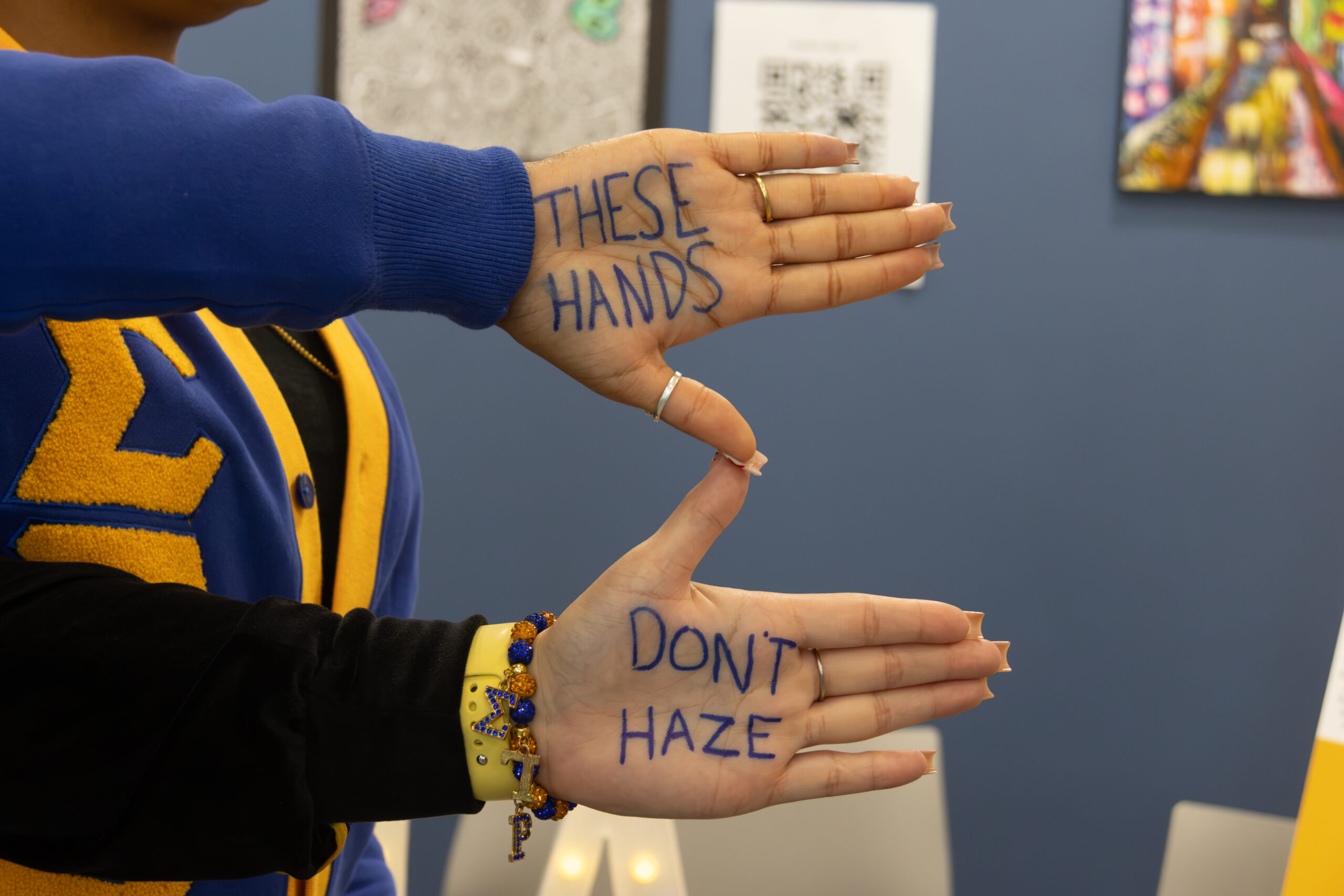
National Hazing Prevention Week (NHPW) brings attention to the dangers and relevance of hazing on college campuses. NHPW, held Sept. 21-25 this year, is a nationwide effort to educate students about the dangers of hazing and encourage safer, more respectful campus communities.
At Butler, informative tabling done by multiple Greek organizations at Starbucks throughout the week gave students opportunities to learn more about hazing prevention and awareness. Butler also recently updated its campus hazing policy in response to federal legislative efforts.
At the state level, Indiana law defines hazing as “forcing or requiring another person to perform an act that creates a substantial risk of bodily injury as a condition of joining or associating with a group or organization.” Punishments include a misdemeanor charge as a baseline and can become as severe as a level 5 felony when physicality is involved.
Within Greek life, traditions play a role in building relationships to create a sense of belonging. However, there is a difference between traditions and bonding activities versus pressuring and embarrassing new members. Butler prohibits hazing on and around campus, so educating about that distinction is an important part of creating a safer chapter experience.
Devin Whelchel-Hall is the director of fraternity and sorority life (FSL) on campus. He works with all of the Greek houses on campus to help students recognize where bonding ends and hazing begins.
“Sometimes we hear language around earning your membership or earning your status in our organization,” Whelchel-Hall said. “So when I talk with student organizations or student leaders, it’s [about] just breaking those pieces down and removing those barriers.”
Within FSL, there are resources available for those who have experienced or witnessed hazing. Whelchel-Hall explained that the platform used to report hazing, Prevent Zone, is accessible for all university students. Additionally, incoming first-years are provided with extra education on hazing prevention through online training modules.
Aiden Gambrel, a first-year pharmaceutical sciences major, is interested in joining a fraternity and is currently a potential new member (PNM). He explained that his experience so far has been positive, and he is excited to go through recruitment.
“I have not [been hazed at all] — in fact, [it has been] the opposite,” Gambrel said. “It is very welcoming throughout all of the frats.”
Gambrel also described how he would feel comfortable reporting hazing if he were to witness or experience it, breaking down the idea that, stereotypically, frats can make recruitment feel like a hazing ritual, but at Butler it is a welcoming community.
Although hazing in college is commonly associated with Greek life, it can occur in any other organization. Butler’s hazing policy includes student-athletes as an important part of the conversations surrounding prevention.
Matteo Morelli, a first-year exploratory business major, is on the football team. He explained that hazing prevention is taken seriously within his team and that the coaches have a zero-tolerance policy. A sense of trust and responsibility is placed on every player to identify and feel safe enough to not put up with hazing culture.
“I think on the football team we take [hazing] pretty seriously,” Morelli said. “I know our coaches would kick someone off the team instantly if something like that happened.”
Hazing prevention on campus also extends beyond just NHPW. Butler provides students with hazing prevention seminars, both mandatory and elective. Student organizations, student groups, athletic teams and student-athletes, faculty and staff have to complete an online course called Hazing 101. Within fraternities and sororities on campus, there is more in-depth training for those in leadership roles and new members. Students can also access external or supplementary short-form elective courses — such as one-hour online awareness courses — that define hazing and outline actionable student intervention steps.
These opportunities are designed to teach students how to identify hazing, prevent it from happening and know how and where to report it. Hazing policies and prevention efforts are campus-wide, and NHPW serves as a reminder that preventing hazing is an ongoing shared responsibility across all college campuses.
To access Butler hazing resources, you can keep up to date with the campus hazing transparency report along with the hazing report form. For immediate help, call BUPD at 317-940-9999.