
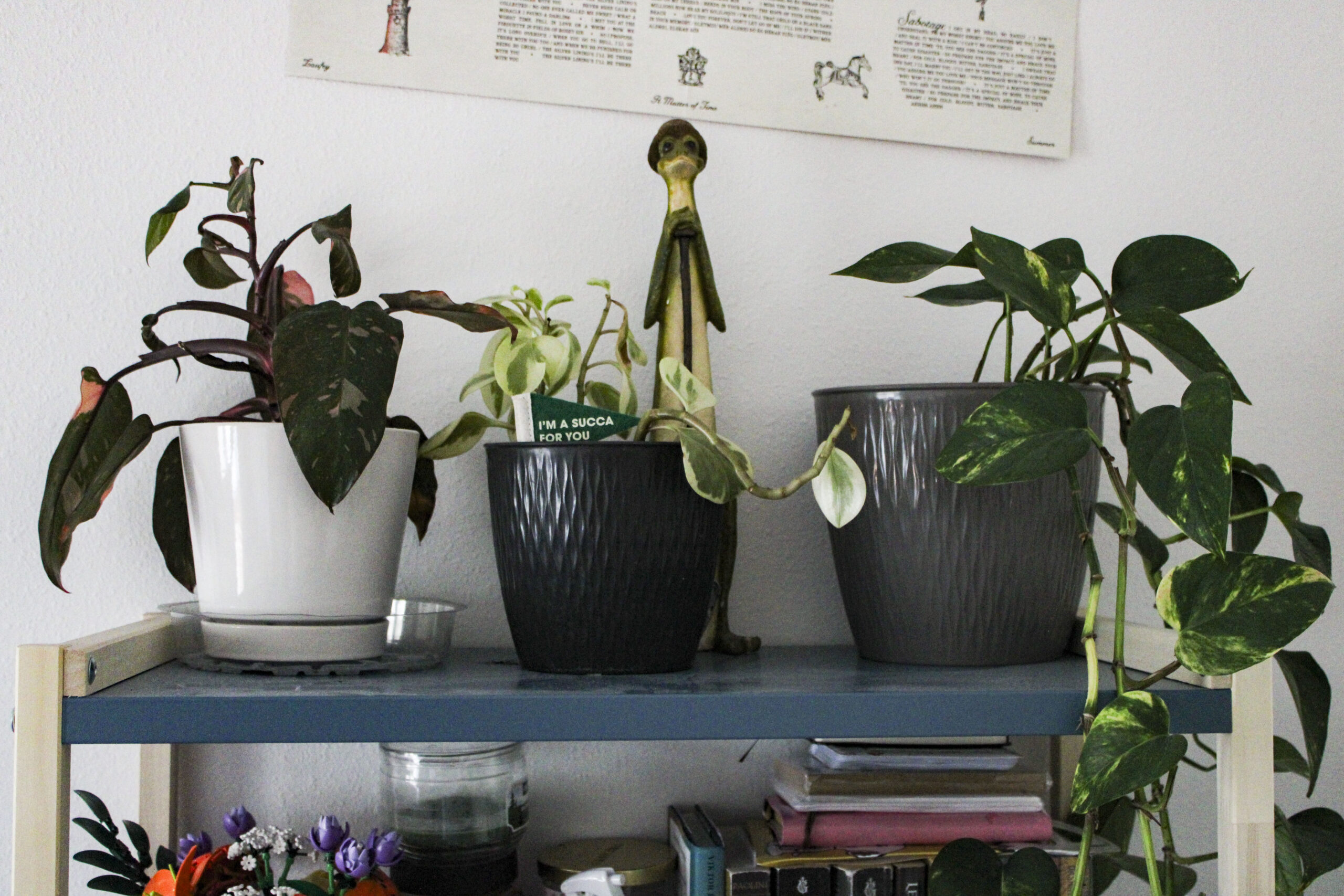
With the stress and responsibility of a college student’s life, the thought of keeping anything other than yourself alive is draining. Although having a green thumb can seem entertaining, we can’t help but think about all the work that it would demand.
Indoor plants take little to none of your time, care or attention. Most importantly, they require very minimal financial investment. Having a plant in your dorm would give it a lively feeling you might be lacking, especially with finals coming up.
A lot of college students don’t want to think of the idea of having a plant because of the extra responsibilities that it would require. However, coming from someone who has kept indoor plants alive for years now, it really is not that much work.
Here are four beginner steps to being a new plant parent:
Step one: Choose a Low Maintenance Plant
There are many plants on the market that vary from high to low maintenance. Some of the easiest plants to keep alive as college students are cacti and succulents. The convenient thing about cacti and succulents is that they require very minimal watering. I water my own cactus once every three weeks and for my succulent, once a week.
The only part that might be challenging is making room for them to receive direct sunlight. In our small dorms with already limited space, you may be worried about where your plant would fit. Make sure to allocate space for your plant to call home before you buy it.
With both of these plants being extremely cheap at your local Walmart and Target, they’re definitely the best option for college students.
Keep in mind, although caring for some plants — like cacti and succulents — may appear to be as simple as watering once a month and indirect sunlight, many plants are more complex than that.
First-year mathematics and Spanish double major Jackson Busse explained how some plants are more than what meets the eye.
“I know some people think all taking care of your plant is watering it and getting it light,” Busse said. “But sometimes plants can be a lot more complex than that, especially when it comes to pruning plants, like bonsai trees. You have to prune the branches to have it grow.”
As a beginner plant mom, it is important to recognize that some plants are simply more complex and demanding than others. Bonsai trees, for example, would not be the best plant to begin your plant journey with, as they require a lot more experience, surveillance, money and time.
Step two: Gather Supplies
Being a broke college student is influential when it comes to what we want to spend our money on. For those of us who choose to invest in a plant, it will be worth the small amount it requires.
Generally speaking, most plants you buy from the store will come in a disposable pot, but we want to get away from those. The first supply we will need is a pot for our plant. It doesn’t matter what it looks like, just make sure it is relatively the same size as the disposable pot it came with and that it has a drainage hole. It is vital that your pot has a drainage hole!
Second, we will need some basic soil for all plant-types. Once again, you can easily find this at Target or Walmart.
Step three: Make Space
When it comes to potting a plant, don’t overthink it. Simply pour some soil into your pot to fill it one-third of the way, sprinkle it with some water, gently place your cactus or succulent inside the pot, pour more soil until it is filled to the top and finally, pack down the soil by watering it and lightly pressing with your fingers.
One of the challenges is finding a suitable area to place your plant in order for it to get the sunlight it needs. As a general rule, if you don’t know whether your succulent needs full sun or full shade, assume full sun. This means your plant should be receiving direct sunlight for at least ten to fourteen hours a day.
I recommend just putting it on your shelf or desk right in front of your window, that way you don’t have to worry about moving it during the week. Make sure to leave three to five inches of free space all around your plant so it can have room to expand.
Making space for your plant can also mean making space for new decor. For Busse, adding plants into his dorm decor has given him a new creative outlet.
“I would say plants have positively affected me in a way that I like how it’s something kind of different,” Busse said. “Normally, what I have going on with decor consists of baskets, or books, or little like nitpickies that are just on shelves. I like having plant[s] because it gives that color, it gives that freshness and a break from the norm of decor.”
Step four: Create Watering Schedule
Once again, don’t let the idea of remembering to water your plant stress you out. I water the majority of my plants once a week and it’s just become a part of my routine at this point.
As a beginner, set an alarm to go off once weekly to remind yourself to water your plant. Or you can put post-its around your room to remind yourself to water it. There are plenty of easy ways to remember to water your plant.If you ever skip a cycle of watering, it is not the end of the world. Just water it when you can remember.
When it comes to a watering schedule, Ella Britain, a first year history and anthropology double major, detailed what hers looks like.
“For watering, depending on what they are, I have a schedule for [which] I usually have,” Britain said. “Once a week [watering] schedule for the ones that require more often, I water them all on the same day. And then I have a schedule for my cactuses and succulents, which they get once a month.”
Talk about low-commitment. With cacti and succulents, there is no need to stress about watering them because of how resilient they are and because of how long they can go without being watered.
With all the stress of our over-booked lives, it is important to take time to pause and enjoy the lives we are growing for ourselves. Adopting a new plant into your life is satisfying, proves that you are responsible and provides a sense of accomplishment when you see them thrive, not to mention they will improve our daily mood and energy.