
Overtime, or “OT,” is an opinion column series where the Collegian takes national sports headlines or polarizing topics and gives them a Butler-centric angle.
Every four years, the FIFA World Cup has hundreds of millions glued to their TV screens. Entire nations are shut down. Legends are born.
Triennially, the World Baseball Classic (WBC) does something remarkably similar, and it still gets treated like an imitation instead of the global event it has become.
The difference in perception says more about baseball’s global image than it does about the two tournaments themselves.
The WBC is not a gimmick. It is nothing like the lackluster new-era NFL Pro Bowl, nor is it like the ever-declining product that is the NBA’s All-Star weekend. It is the highest level of international baseball competition, featuring the sport’s biggest stars choosing to participate.
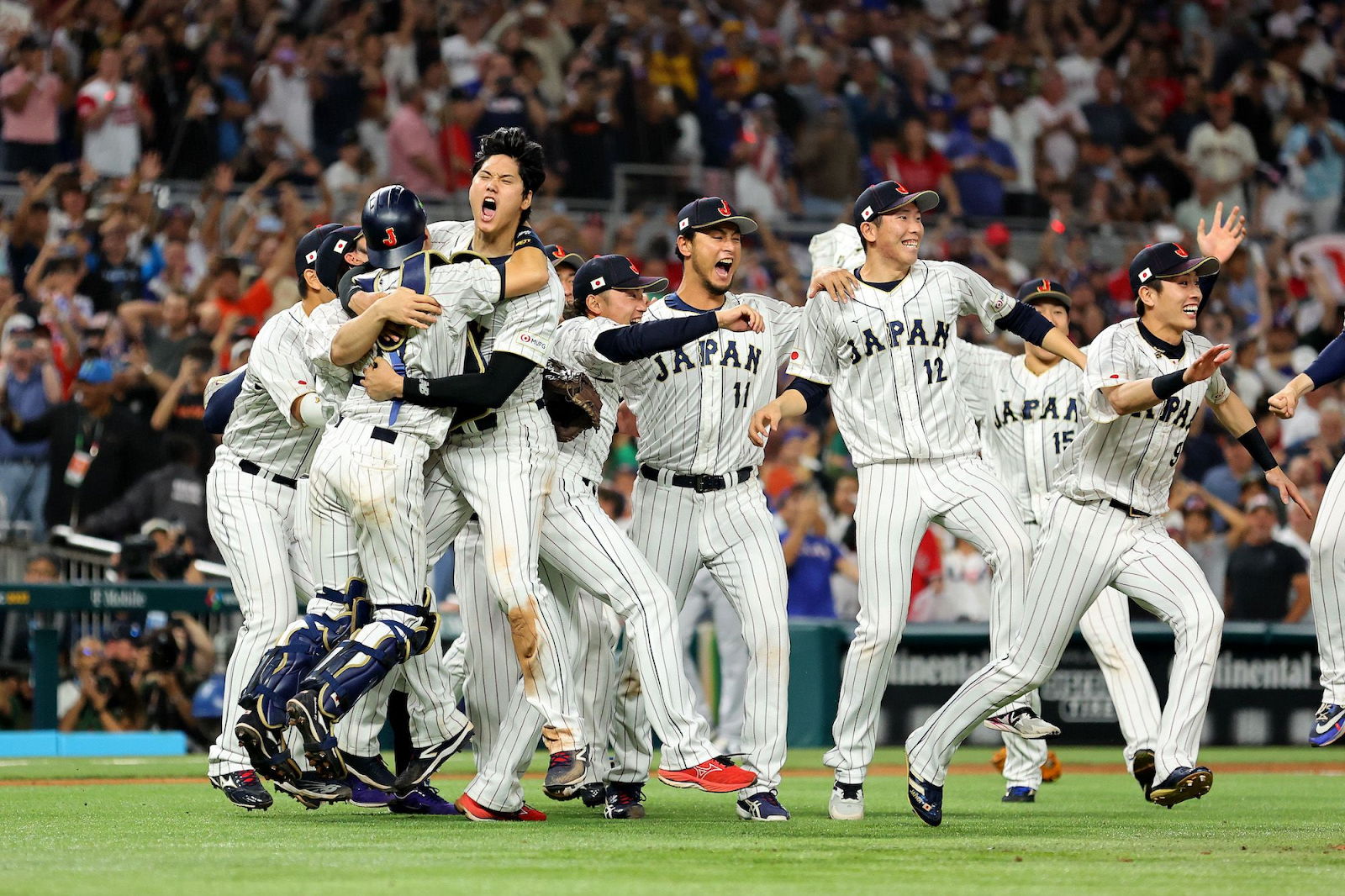
In 2023, the WBC Championship game between the United States and Japan ended with Shohei Ohtani striking out then-teammate Mike Trout in a storybook finish. Two of the most recognizable players in baseball — who had never faced each other before — went head-to-head for bragging rights, a $1 million prize pool and, most of all, national pride.
What makes the World Cup sacred is not just history, but the stakes. Players compete for flags, not franchises. When a country wins, it is not just 26 players celebrating; it is an entire country rejoicing.
The WBC operates on the same principle. When Japan takes the field, it does so as “Samurai Japan” – a program backed by a culture that treats international success as a matter of pride. That cultural backing matters.
The difference between the World Cup and the WBC is not competitive intensity; it is infrastructure.
Soccer has nearly a century of institutional momentum, as the first World Cup dates back to 1930. Entire generations have grown up attached to it. Baseball’s flagship international tournament was first played in 2006, and is still building that generational muscle memory.
Luke Carravallah, a first-year sports media major, is a fan of the WBC and says the distinction between MLB and international play is night and day.
“It’s just a different feeling,” Carravallah said. “It’s not for an ownership group they work for … It’s just for their own pride.”
That distinction is critical. In MLB – and other pro leagues – players represent brands. In the WBC, they represent flags.
Senior marketing major Connor Kossman views the tournament right up there with the MLB postseason.
“[The WBC and MLB postseason] are definitely comparable,” Kossman said. “You have the best players in the world on a unique stage … A lot of those guys feel like they have something to prove on a worldwide stage.”
Carravallah acknowledged the obvious counterargument: baseball does not have the same reach as soccer.
“Baseball is a sport that [draws] from about seven to 10 countries,” Carravallah said. “If everyone thinks about [an] international sport, it’s gonna be soccer, and it’s not a knock on baseball. It’s just how it is.”
The World Cup draws from virtually every continent, while baseball’s elite competitive base is concentrated into less than a dozen countries. However, scale alone cannot determine legitimacy.
If it did, Olympic basketball would not matter to fans, and neither would Olympic hockey. Yet, when NHL stars compete for gold, debates erupt over whether an Olympic medal outweighs a Stanley Cup.
Even Carravallah admitted that American sports fans are conflicted about international tournaments.
“My friend was saying that he’d rather the U.S. win gold than our favorite NHL team – the [Detroit] Red Wings – win the Stanley Cup, which I thought was blasphemous,” Carravallah said. “He was pretty adamant. So it’s a mixed bag [from fan to fan].”
That reaction says less about tournament value and more about American sports fans. Domestic leagues dominate the ratings, and international tournaments have fallen secondary by default.
Camden Esterline, a first-year sports media major and soccer fan, offered an extended perspective.
“There [are] so many countries around the world that only have soccer to watch,” Esterline said. “It’s their only sport. They just wait for the World Cup for four years.”
From this perspective, the World Cup derives much of its power from anticipation. For many nations, soccer is the only sport that demands that level of united attention. Respect for an event also builds over time, and much of the World Cup’s acclaim is the product of repetition – with the 2026 tournament being the 23rd edition. The WBC has had just five iterations — and one was canceled due to COVID-19.
Kossman pointed out that the aforementioned 2023 WBC Championship was one of the most-watched baseball games ever. Inside of loanDepot Park in Miami, the game was sold out, reeling in over 36 thousand fans. On TV, a mind-boggling 42.4% of Japanese households watched the final, despite the game airing at 8 a.m. on a Wednesday in Japan Standard Time.
All in all, the game averaged 32.81 million worldwide viewers, blowing the other three baseball spectacles — the World Series, College World Series and Little League World Series — out of the water. While those numbers still don’t come close to the World Cup, it was a historic day for baseball, and it reinforces that scale does not determine legitimacy.
In addition to Trout vs. Ohtani, Carravallah pointed to moments like Adam Jones’ 2017 home run robbery of then-teammate Manny Machado and Trea Turner’s go-ahead grand slam against Venezuela in 2023 as proof that the tournament consistently produces high-stakes moments.
Especially for 2026’s tournament, these are not watered-down rosters. The WBC features all-MLB lineups playing elimination baseball.
Team USA boasts both 2025 MLB Cy Young winners — Pittsburgh Pirates right-hander Paul Skenes and Detroit Tigers left-hander Tarik Skubal — the American League MVP in Yankees outfielder Aaron Judge, and his runner-up for the award in Mariners catcher Cal Raleigh.
The Dominican Republic roster features over 35 combined MLB All-Star appearances on its roster, while Japan looks to run it back with many familiar faces from their 2023 championship roster. Another team to look out for is Mexico, whose roster only improved from its surprise third-place finish in the 2023 tournament.
So, if the talent matches MLB postseason quality, with the stakes involving national pride and the viewership reaching historic levels, then what exactly makes the WBC unfit for international respect?
The answer is essentially cultural stagnation. American sports fans are conditioned to treat organizational championships as the pinnacle. The NFL, NBA and MLB seasons take up much — if not all — of the calendar year. Once a champion is crowned, their banners display “world champion.” International play seems to interrupt domestic play rather than complement it.
Soccer operates inversely. Domestic leagues are prestigious, but the World Cup is untouchable.
The WBC is challenging the sport of baseball. The World Series has long been — and will still be framed — as a “world” championship despite being an American league.
Fans’ best move this year is to take advantage of something that has only happened once before, which is the two tournaments overlapping.
Running from March 5-17, the 2026 WBC will precede the World Cup, which will take place from June 11 to July 19.
As a young tournament, the WBC grows every time it is played. The question is not whether the WBC equals the World Cup in history. The question is whether it equals it in competitive integrity, emotional stakes and global pride. Watch both tournaments, appreciate both and — especially for baseball fans — give international play a fair chance.