
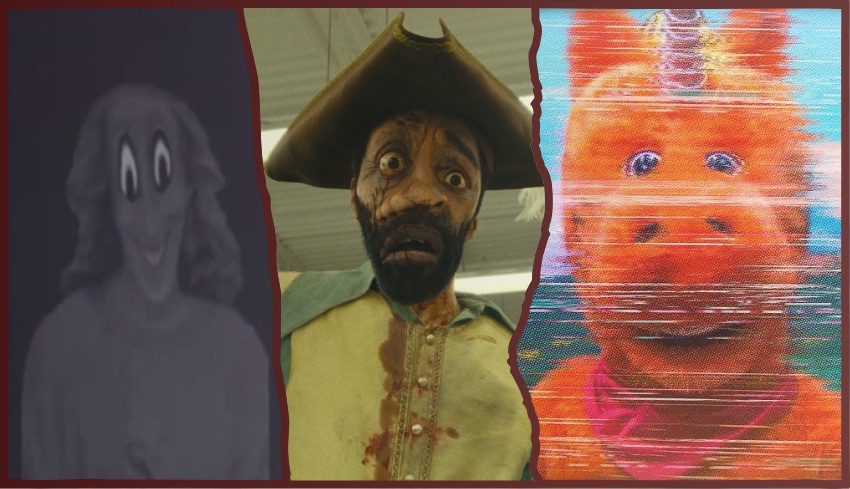
Horror comes in all shapes and sizes, but it also comes in all video qualities. Grainy frames and VHS filters define analog horror, the new genre taking the Internet, and now cinema, by storm.
Popularized by YouTube series like “The Backrooms” and “The Mandela Catalogue,” analog horror has become perhaps the most prevalent genre of Internet fiction in recent years. Like any good trend, it has found its way all the way into the mainstream with several movies and more to come.
Peter Matsoukas, a film and media production lecturer and producer of the upcoming analog horror film “The Depths”, shared that working with young director Tristan Reed has revealed what makes the genre so popular among younger generations.
“I think that we all are seeking something that we don’t have,” Matsoukas said. “When I was an undergraduate, I romanticized the ‘70s … [For] people of this generation who were born in the early 2000s, I think it’s only natural to think about last millennium. It feels like a larger chasm, even though it’s only a few years [because] things have changed a lot.”
By far, the most well-known example of analog horror is “The Backrooms”, a liminal horror concept inspired by the emptiness of spaces only meant to be passed through. Though many versions of “The Backrooms” mythos exist, Kane Parsons made it his own with his YouTube series and recently-released movie.
Similarly, “The Mandela Catalogue” has garnered a sizable following and even its own film deal. The video series follows the fictional Mandela County as it is tormented by Alternates — madness-inducing creatures ripped straight from the uncanny valley — and has been praised for its ability to unsettle and disturb even with low-quality images and videos.
It is not difficult to see the relationship between the growing popularity of Internet-based horror movies and the rise of content creators to Hollywood stardom. Between the success of influencer-made movies like “Backrooms” and “Obsession” and upcoming adaptations like “The Mandela Catalogue”, it is clear that content creators can work their magic on the big screen.
Senior English major Evan Thomas worries that the market for these types of stories is quickly becoming oversaturated.
“I don’t see a lot of creativity in it anymore,” Thomas said. “I don’t see a lot of drive to innovate on something. I just see a lot of, ‘Oh, look at this creepy room with a filter to make it look like VHS footage.’ I’ve found a lot of analog horror that I thought was good, but a lot of the modern stuff I wouldn’t even be able to name because it’s all just become so ubiquitous.”
Thomas’ concerns have already been validated by an influx of analog horror adapting any property possible. Many are earnest attempts, but an entirely new market has opened up for analog horror parodies. For each artist inspired by the trend, there is an opportunist trying to exploit it.
Analog horror has seen a lot of overlap with horror based around children’s media, specifically older shows that would be on VHS tapes and other analog media. “Monkey’s Magic Merry Go Round” and “Mr. Crocket” brought nightmarish twists to the concept behind “Mister Rogers’ Neighborhood”; one turned its parodical host into a victim, and the other made him a monster.
Most recently, “Buddy” took advantage of both the analog and mascot horror trends by turning “Barney & Friends” into a terrifying film as grim as it is colorful. “Buddy” garnered as much controversy as fame, as its disturbing themes of child murder angered parents who failed to see the R rating.
Analog horror is not an entirely new phenomenon. Its roots lie firmly in found footage — pioneered by “The Blair Witch Project” in 1999 — which makes the camera a part of the movie’s world. The characters themselves are recording what is happening to them, transporting the viewer directly into their hands.
Senior music industry studies major Shelby Thickstun explained that her love of analog and found footage horror comes from its sense of immersion.
“It puts the watcher in the eyes of the character,” Thickstun said. “When I watch things, especially if it’s [through] that lens, I’m really feeling like I am in that scene, and that’s scary. I don’t want to be there. I would never survive any of the movies that I’ve watched.”
The course of a genre so young is impossible to chart at this point, but it is clear that its rise in popularity is not yet done. With Internet creators emboldened to create their own analog horror and more movies on the way, this grainy footage of a train will not be stopped any time soon.