
The ‘United States of Europe’: What America can learn from across the pond
Americans often view Europe as a charming vacation spot with old buildings, quaint cobblestones and slow service. However, they frequently fail to realize that on almost every metric of physical human flourishing — from transit and health to work-life balance — it is Europe that represents the “new world” of progress, while America is falling behind.
As an international exchange student, I have the distinct privilege of getting to know the United States firsthand. While America certainly has its own triumphs — enough to fill another article entirely — the United States can learn some things from its neighbors across the Atlantic.
Redefining education and lifestyle
When international students arrive in the United States, the culture shock is real. Sarah Le Marre, a French exchange student and international law major, noted the inherent differences in both the education system.
“The educational system is completely different,” Le Marre said. “After high school in France, we have to specialize in a field, and in the U.S., you can choose whatever you want.”
The American four-year university model, with its broad general education requirements, often looks like a delayed entry into adulthood on a donor’s dime. In Europe, university is treated as a strict professional commitment rather than a four-year summer camp.
Europe produces specialists ready to contribute to society by age 21, whereas the U.S. system prioritizes a “college experience” that frequently leaves students saddled with massive debt.
A continent of diverse cultures
Esther Gonzalez, a senior finance and international business double major, has spent years helping international exchange students navigate their time at Butler. Through her role, she has noticed the stark interpersonal differences between Americans and Europeans.
“I learn a lot, I [like] how different we are,” Gonzalez said. “Europeans are very nonchalant, [in French] there aren’t so many rules to be polite to a person you just met. But I guess that does vary.”
This variation is vast. Gonzalez noted the unique dynamic of British humor, for example.
“I thought [British people] were super polite,” Gonzalez said. “But with your friends, you are kind of mean to them.”
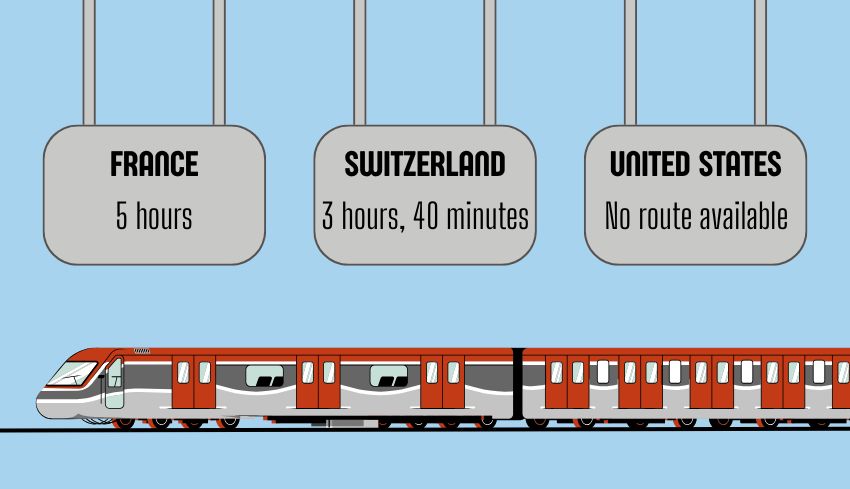
In Europe, a short train ride completely shifts the cultural landscape. You can leave the dry sarcasm of the U.K. and arrive in France within hours. The nations within the “United States of Europe” allow a high, free level of movement, but maintain distinct, vibrant cultures.
“It shocked me because you just can go on a two-hour flight from France to England and the culture differences are really noticeable as soon as you land,” Gonzalez said. “Here I could go to Boston, [and can tell that] there are a few differences, but I think [the states are] pretty much the same. All these European countries are so close, but it is just so different [one country to another].”
Dena Mulligan, associate director of faculty-led programs at the Butler Center for Global Education, echoed this sentiment.
“Every country in Europe has its own culture and [its] own system,” Mulligan said. “Things are very different, even though there are certain things in close proximity to each other.”
I routinely experience this at home. If I have a workday that can be completed remotely, I can board a train and head to the German-speaking mountains, the French-speaking city of Geneva or the Italian-speaking region of Ticino. After a three-hour ride, I am in an entirely new world.
This brings up a crucial point about infrastructure. While Americans pride themselves on being the “land of the free,” there is a profound lack of freedom in being forced to own a car just to buy a loaf of bread.
I can traverse the Swiss Alps with a book in my hand and a hot chocolate on my table; meanwhile, my American peers are trapped in traffic, clutching steering wheels in a state of constant stress. The U.S. has sacrificed its citizens’ time and autonomy to the highway.
Towards a united worldview
Despite these differences, there is a shared globalizing thread between our continents.
“People are interested in Europe because it is similar to America, and that is an easy jump, an easy new experience to have,” Mulligan said. “America is a melting pot; that is true of Europe, too. There are a lot of different backgrounds and cultures that come together, which makes it great.”
Mulligan recognizes that both continents are striving toward greater inclusivity.
“Europe has a lot of diversity, in America there is a lot of diversity,” Mulligan said. “Both are working towards everyone feeling [that] they are welcomed and accepted … Overall, in the U.S. and Europe they like wanting to be accepting of other cultures.”
Ultimately, the goal of cross-cultural exchange at Butler extends far beyond the classroom.
“Yes, we want you to study, [and] we want you to learn something, but experiencing another culture is what really helps [a] person to develop,” Mulligan said. “They come back with a sense of understanding other cultures.”
Bobbie Gibson, associate director for international student services, offered a memorable piece of advice to international Bulldogs upon their arrival on campus:
“You need to be aware when going back that you are the one changing, not the people at home,” Gibson said.
As a Swiss Bulldog, I know that Butler is changing me. I hope that by sharing this perspective, I can change your view on Europe as well. To attack the problems of our age, we must be willing to learn from one another. By recognizing what other nations do better, we take a small, crucial step toward a truly peaceful and united world.