
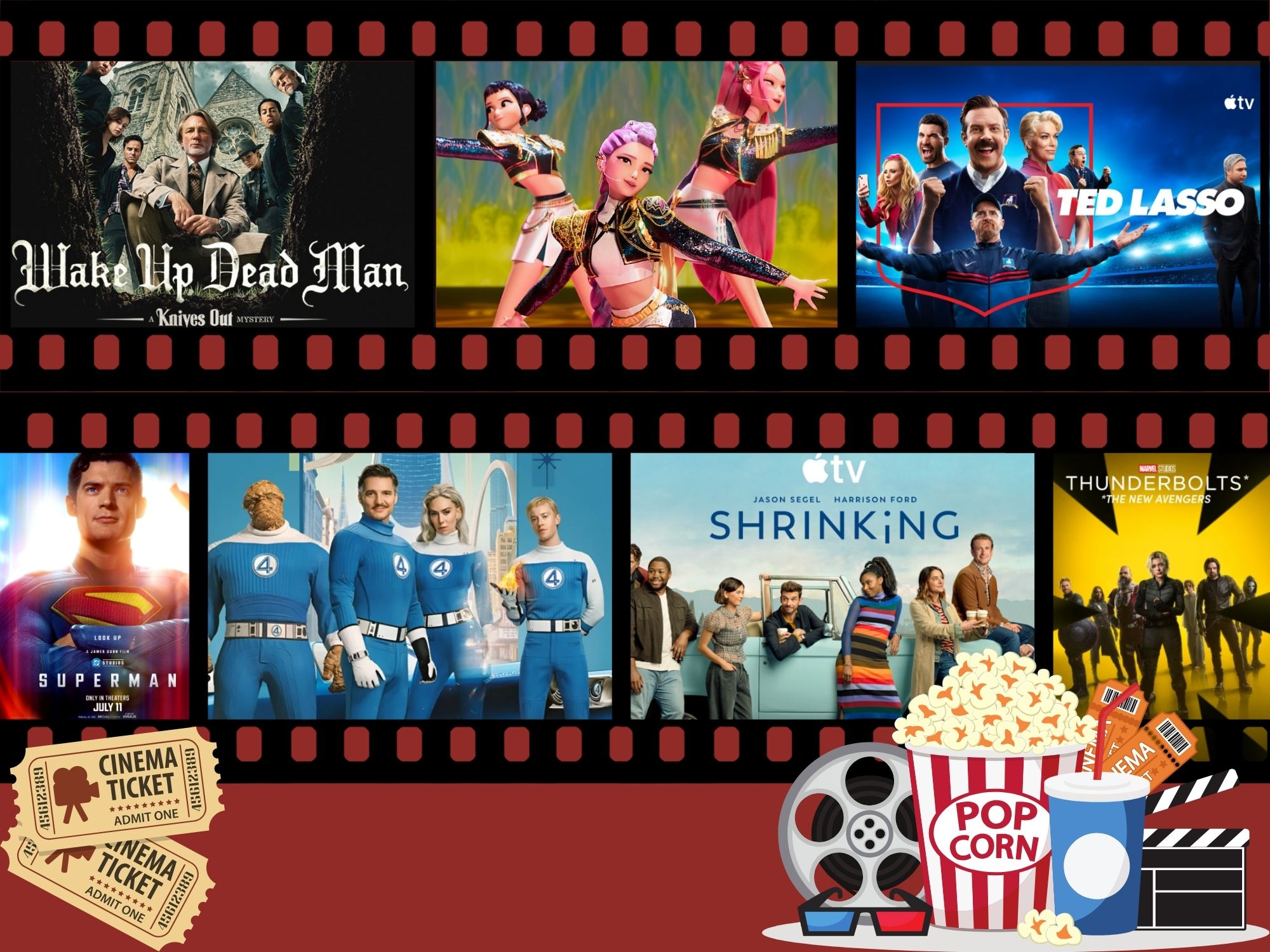
With Hollywood awards season in full swing, it is time for viewers to look back over the past year of movie and television releases. From classic mysteries such as “Wake Up Dead Man” starring Daniel Craig and Josh O’Connor, to movies with viral soundtracks such as “KPop Demon Hunters”, starring Arden Cho, May Hong and Ji-young Yoo, new media from 2025 seems to be following a hopeful trend up.
This new outlook is a change from the anti-hero narrative that championed the 2000s to the mid 2010s. Shows like “Breaking Bad”, “Mad Men” and “House” — which focused on sympathetic yet morally questionable protagonists — are now being replaced with characters such as Ted Lasso or Jimmy Laird in “Shrinking”.
Natalia Collazo, a first-year creative media and entertainment major, has been keeping up with new productions and trends in recent years.
“I think the 2010s [were] a time of self-acceptance … and with that comes [the] understanding that people are flawed,” Collazo said. “That cognitive dissonance of bad people doing good things or vice versa really resonates with audiences.”
Walter White’s transition from a mild-mannered chemistry teacher to the notorious drug dealer Heisenberg is one example of the conflict. The development challenged the typical representation of the “everyman” trope in most media. Comic book fans can point to the rise in popularity of anti-heroes like Deadpool and Red Hood — violent vigilantes with just enough morals to protect kids.
However, as the public attitude and culture have changed across the board, so has public media. This is most notable with the return to the “boy-scout” characters, such as DC revisiting “Superman” in 2025 with its “Look Up” marketing. At the same time, Marvel reintroduced Sam Wilson as the modern Captain America.
“I think there definitely has been a shift toward more hopeful movies, and that’s really awesome to see,” Collazo said. “Movies are one of the greatest art forms in my opinion, and I think this shift toward hope is a form of rebellion that I am really loving.”
The positive trend is appealing to general audiences as well, bringing more people to theaters and streaming services to experience new stories.
First-year strategic communication major Justine Starke is a casual movie enthusiast.
“As an audience member, I definitely prefer more hopeful and lighthearted movies,” Starke said. “Hopeful movies are more appealing [now] because they imply that something better is possible.”
The positive switch between the genres may also reflect an audience that grows increasingly separated with the decisions of awards shows and critics.
First-year political science major Olivia Lacke discussed the repetitive nature of recent pop culture releases.
“I think the film industry has taken a hit,” Lacke said. “There aren’t a lot of original ideas anymore; it’s a lot of sequels and remakes. I find the cyclical patterns of the film industry to be refreshing.”
Even more action-based movies, like “Thunderbolts*” or “The Fantastic Four: First Steps”, have begun to focus on internal conflict and familial relationships rather than direct confrontation. In this way, films rely less on explosions and more on emotional character beats.
As hope returns to movie theaters and film makers prepare their next projects, film fanatics are embracing the new optimistic outlook. The current media trend is inspiring them to work toward a brighter — and increasingly positive — future.