
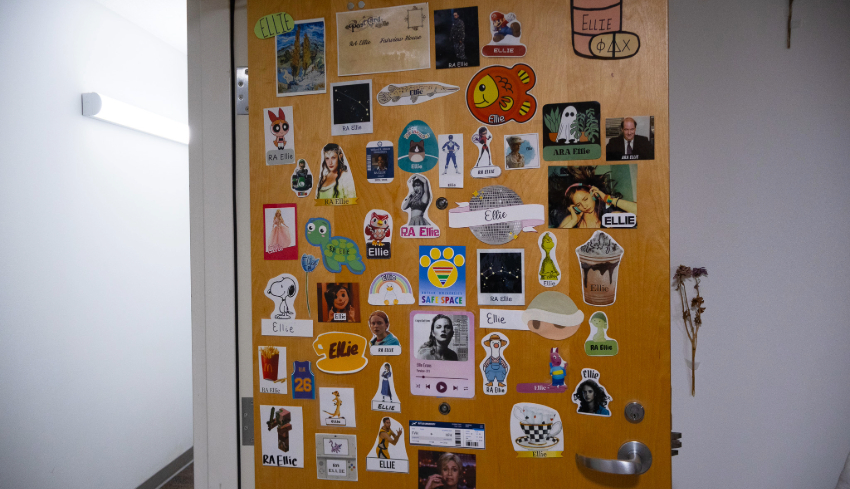
The 2027-28 application for Butler’s Resident Assistant (RA) role has officially opened, causing many students to think about throwing their hat into the ring. For Bulldogs wanting to learn more about how RA responsibilities mesh with the student experience, who better to hear from than current RAs?
When senior health sciences major Ellie Evans experienced difficulty adjusting to her new life at Butler, she leaned on her RA for support and even joined a professional fraternity at her RA’s suggestion. Evans’ positive relationship with her RA ultimately piqued her own interest in the role, and she has found great personal fulfillment being a resource for students.
“I have grown a lot and matured a lot through this experience,” Evans said. “Also, it’s a way to really connect with new people. There are plenty of people I would have never met if I wasn’t an RA.”
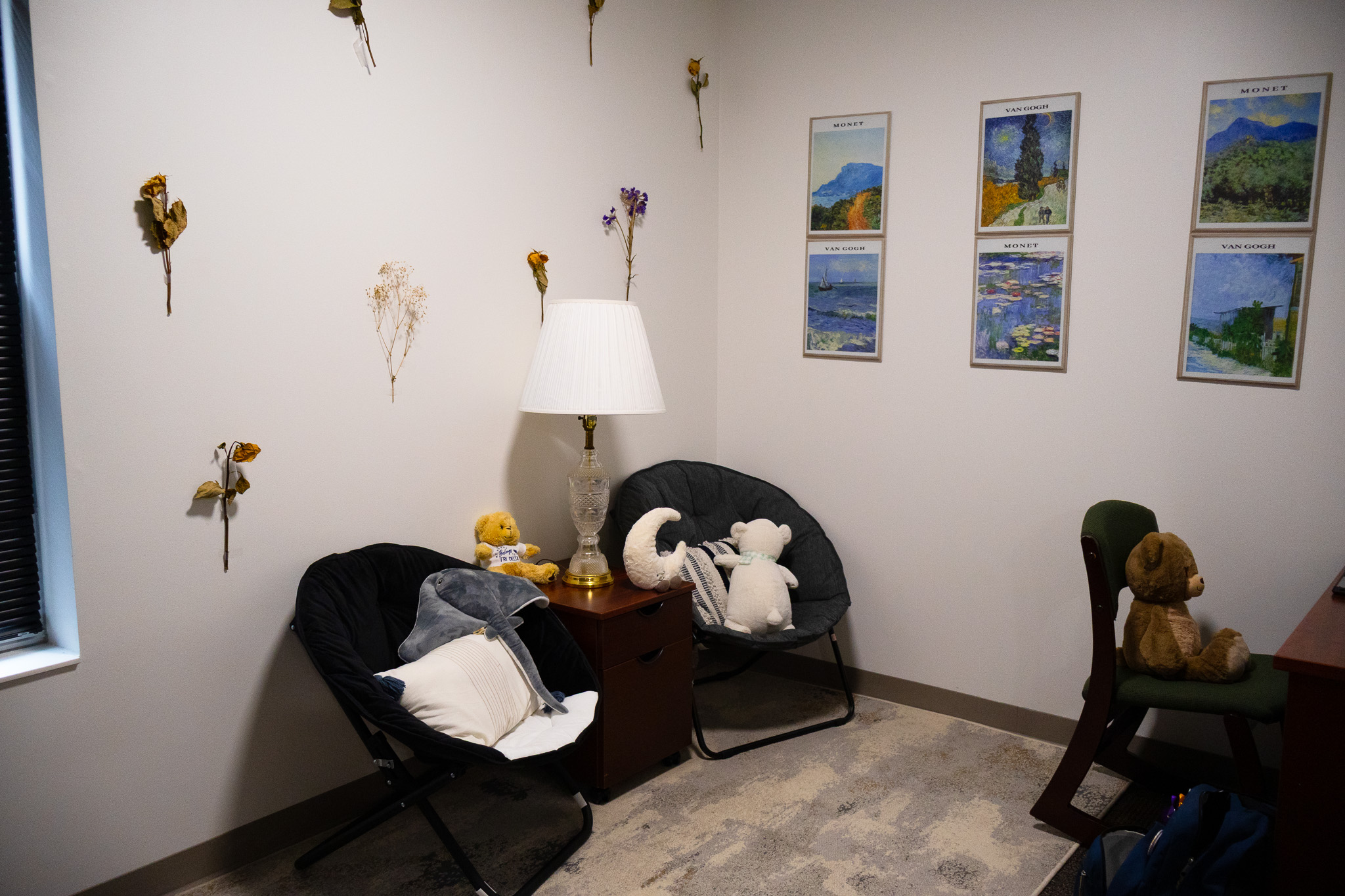
Evans decorated her RA apartment with framed art, dried flowers and other personal touches. Photo by Emily Gagnepain.
Students might assume that RA jobs are relatively cushy with little work and high reward, but this could not be further from the truth. While simple roommate cleaning disputes seem easy to handle, RAs are also often entrusted with heavier, more emotional information if their residents choose to share. Their responsibilities are also difficult to balance with coursework, social lives and clubs.
Max Haley, a junior strategic communication and sports media double major, explained that each RA agrees to be on call during evening and overnight hours for their fair share of shifts. He typically serves 12 or 13 of these duty shifts per semester, with two or three occurring over weekends.
“The most difficult part of the role is responding to stuff that comes on the fly,” Haley said. “It can come at 7 p.m. when you start your duty shift. It can come at 7 a.m. It could come at 2 a.m. and you have to be there pronto because somebody could be having an emergency, somebody could be locked out of their room or somebody could be having a conflict with their roommate.”
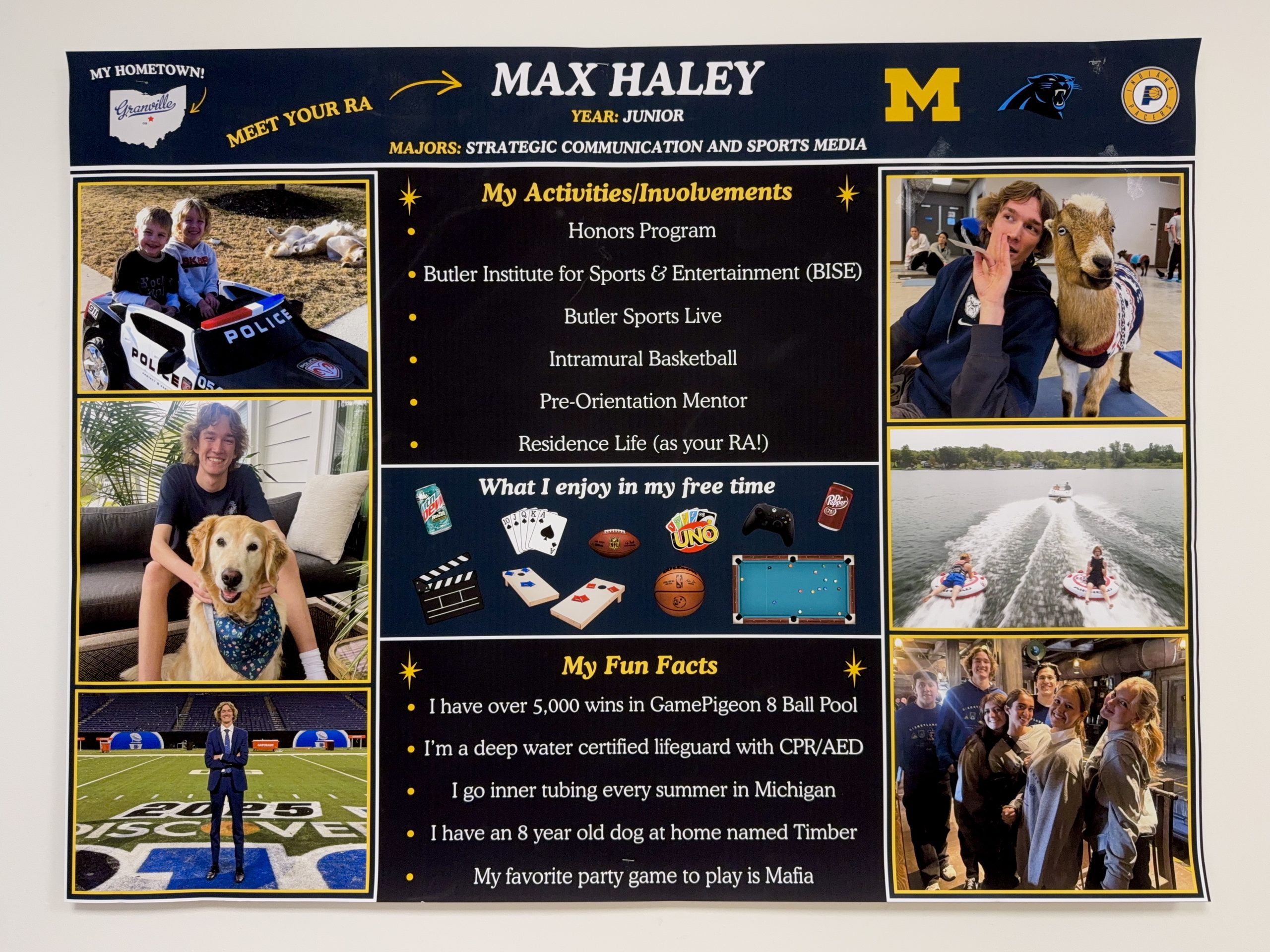
Haley endeavors to cultivate an open, friendly environment among his residents. Photo by Abby Kidwell.
While on-campus living poses challenges for all students, regardless of how seasoned they are with dorm life, the RA experience is still often shaped by what residence hall one is placed in. In Irvington or ResCo, first-years struggle with sharing space for the first time, homesickness and even whether Butler is the right fit, meaning RAs are tasked with being their residents’ first introduction to college life.
Logan Byrd, a senior dance arts administration major, has been an RA in Irvington and Fairview.
“[With first-years], you just have to be more hands-on, a little bit more direct, because everyone comes from different backgrounds,” Byrd said. “With sophomores, there’s definitely more independence, [but] they do come to you still.”
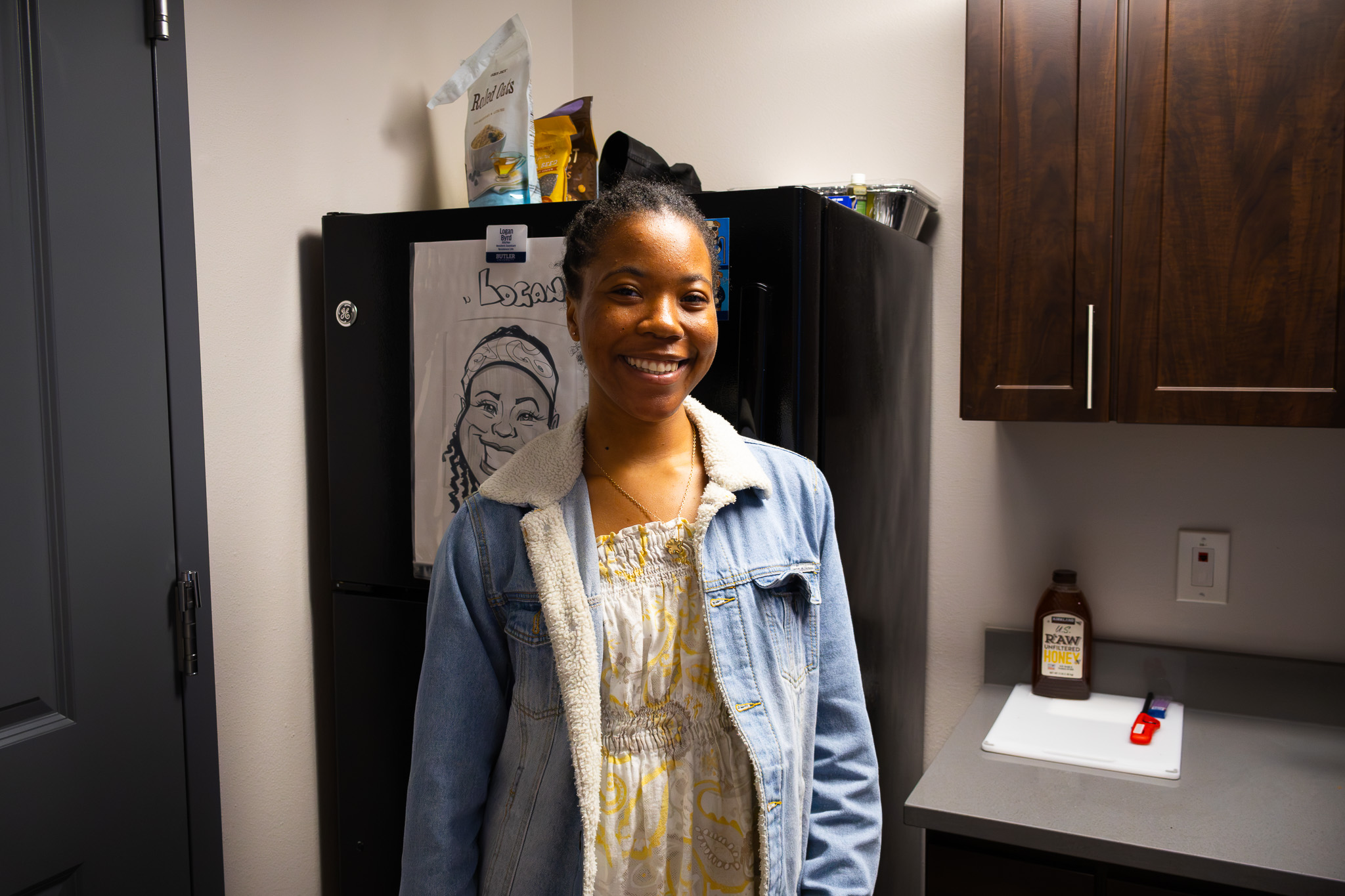
Byrd leads with compassion in her RA role. Photo by Emily Gagnepain.
However, this does not mean that RAs are unnecessary for older students. Fairview residents may discover that the friend they agreed to live with was actually not the most compatible choice, and rowdy upstairs neighbors can be a sore spot for those living in Apartment Village, both of which are issues where RAs might get involved. No matter where an RA is placed on campus, they are an essential resource.
Haley has observed how different residential buildings have different dynamics. Despite living in Irvington during his freshman year, Haley wanted to be an RA in ResCo due to the lively social atmosphere he had heard about.
“[This year, in ResCo specifically], they’re not on their phones as much,” Haley said. “They’re not on computers. They’re out [in the common spaces] playing games. They’re out going on hikes, runs, bike rides with each other … It creates such a strong sense of community. Honestly, when I talk to my parents about it, they’re like, ‘That’s how college was when we were there because we didn’t have phones.’”
Plenty of students may wonder if they have what it takes to be an RA. Creating a thriving community of residents requires patience, organization, time-management and amiability, among other things.
Evans identified empathy and proficient communication skills as some of the traits that RAs need to possess.
“There are a lot of emotional things that residents will bring to me, and so you have to be able to put yourself in their shoes and see how it is realistic for them to work through issues,” Evans said. “You have to be comfortable speaking with people very regularly.”
RAs form the cornerstone of Butler’s campus culture, and an ill-equipped RA has the power to make or break the school year for their residents. If readers see themselves in Evans’ empathy, Haley’s kindness or Byrd’s positivity, consider this a sign to take the leap and apply to be an RA.
Before applying for the RA position, attend the last information session, which will be taking place on Oct. 7 in the Irvington community room at 6 p.m. The RA application is due by noon on Oct. 18.