
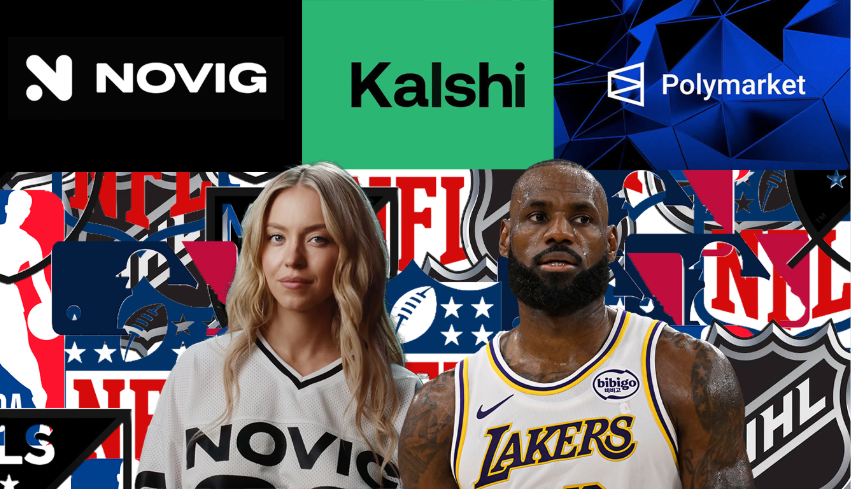
In Sydney Sweeney’s controversial new ad for Novig, a sports prediction company, the final line she says is, “Just you, your take and sports.” Ironically, that statement epitomizes how people currently feel about game-day ads — sports come last.
As sports betting has become more mainstream and prediction markets like Kalshi and Polymarket have emerged, it seems impossible to escape ads mentioning either one. It feels like every other ad is someone talking about how much money you get in bonus bets by signing up, or how trading and making money has never been easier.
Junior sports media major Joe Miller feels ads are evolving from minor hindrances to an invasive parasite.
“Gambling ads are annoying,” Miller said. “As a team’s taking the field, I don’t care what the [betting] odds [are].”
Sports betting offers one the chance to profit off the games and teams they love, but it can also change how they see them. Depending on what fans bet on, they could find themselves hoping that their team loses a big game or wishing that a certain athlete goes down with a season-ending injury.
Before fans know it, the lines blur between what happens in the game and what happens in their lives, letting 60 minutes of their day dictate their week.
Prediction markets in particular are keen on using well-known celebrities and athletes in order to promote their services.
Two weeks ago, audiences across the nation saw a scantily-clothed Sweeney promote Novig — a service that she is an equity owner and creative director of — by posing nude with various sport-related items. They also witnessed the unveiling of the “Polymarket HQ” commercial, starring LeBron James, Eli Manning, Derek Jeter, Sue Bird and a plethora of other star athletes and celebrities.
These commercials airing around the same time are no coincidence. They are laying the groundwork for other companies in their industries to do what they can to take your most valuable possession: your attention.
Gaining someone’s attention is a hard-won commodity nowadays. With shrinking attention spans and constant digital distractions, some companies — such as Novig — are more willing than ever to do something risky with their advertising to gain traction.
Senior lecturer Robert Norris, referencing Sweeney’s ad, provided insight into how effective or detrimental these kinds of ads can be.
“In a case like that, they’re using sex to sell,” Norris said. “Sex will always draw the audience’s attention, but they often don’t remember what’s being sold. That’s the drawback. Unless you’re selling perfume or lingerie or something that has a sexual component to it, it’s often a good idea not to resort to it.”
What is memorable is the public uproar that follows contentious commercials, like the aforementioned Sweeney ad or Timothée Chalamet’s Kalshi ad series. For sportsbooks and prediction markets, all publicity is good publicity, even if it puts some in an uncomfortable position.
The ‘Polymarket HQ’ ad, for example, serves as a textbook case of using opinion leaders to get the ball rolling — using current and former athletes to promote sports predictions — yet it puts its leading man, LeBron James, in a sticky situation.
Last week, the five major American sports leagues — MLB, NFL, NBA, NHL and MLS — and their individual player associations came together to sign a letter sent to gambling supervisors in 35 states. The letter’s purpose was to request protections for players and staff from sports bettors with a history of betting-related harassment, among other things.
If these new requests are not adopted, what should James do then? Should he continue to promote a service that is actively fueling the risk of harm for himself, teammates and staff members, or back away from the millions of dollars on the table for something that might not affect him?
When it comes to using these opinion leaders in betting and prediction commercials, junior finance major Alder Brown believes active athletes should not involve themselves in these ads.
“Their intention is not for you to really make money,” Brown said. “They know that it is gambling, and they’re trying to make it seem like it’s cool, because they’re [athletes] and whatever. I think it’s lame.”
Although it seems like people do not have a true say in what ads they see on television, that could not be further from the truth.
When NFL RedZone introduced commercials to their program in 2024, fans were dejected that “seven hours of commercial-free football” was put to rest, just like that. Then, in 2025, they added even more ads to the show — leaving it a shell of the once-championed football broadcast.
Fans were fed up, and they proudly let ESPN know it by boycotting. After the 2025 season, petitions were created and subscriptions were canceled as fans hoped their acts of defiance would yield positive results for the show’s future. Then earlier this year, NFL RedZone host Scott Hanson announced that ads would be reduced heading into this season — the fans had won.
While athletes and celebrities may choose to participate in these commercials, and networks decide what to air, consumers have the right to set the bar. If fans believe these advertisements go too far, they can choose to not support the companies that create these commercials and, if it gets to a point, even refuse to watch the networks that allow these advertisements.