
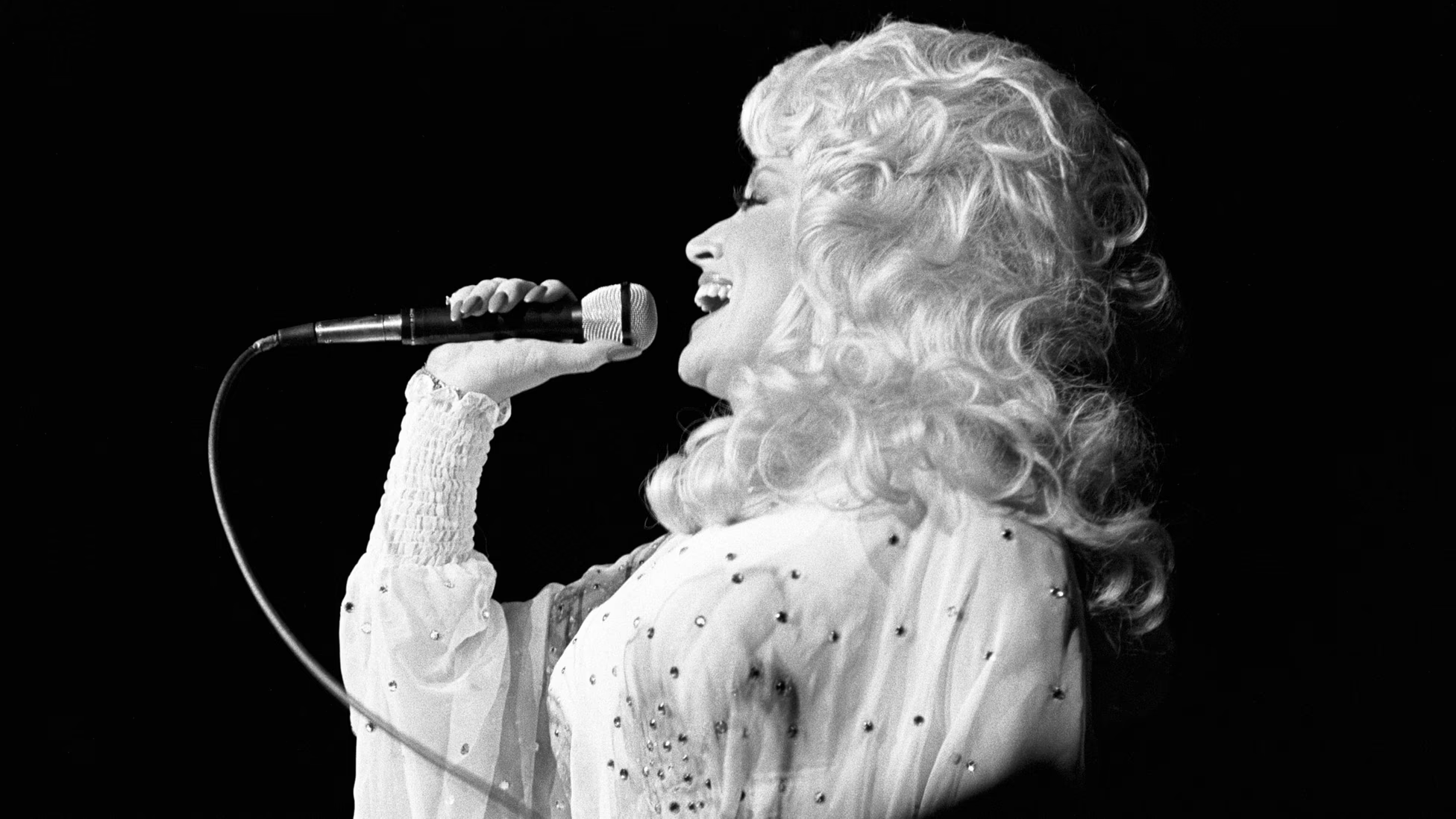
On Tuesday, Aug. 25, at the age of 80, Dolly Parton, the iconic American figure and country music legend, passed away after a brief battle with cancer. The sudden loss has swept the nation, and at Butler University, has been a topic of conversation and mourning among students and professors alike.
Zach Ross, a junior acting and English double major, noticed the impact of Dolly’s death on campus immediately.
“We had a moment of silence in my very first class for her,” Ross said. “Just because her impact was big enough that it connected everybody and every generation … Honestly, I feel like the world is losing [a] little bit of magic because she held a lot of that.”
Born in rural Appalachia in Locust Ridge, Tennessee, Parton was one of 12 siblings sharing a small one-room cabin nestled in the Smoky Mountains. A star with a classic rags-to-riches story, Parton rose to fame after appearing on fellow country music star Porter Wagoner’s show. From there, the rest was history. Parton went on to receive 10 Grammy awards and 55 nominations, along with an induction into the Rock & Roll Hall of Fame.
Parton’s reach goes far beyond just country music. In the late ‘80s, Parton created The Dollywood Foundation, with a goal of decreasing school dropout rates in her hometown. The initiative was successful, declining the dropout rate from 35% to just 6%.
Another one of her more notable efforts under the foundation was the Imagination Library, which started by sending one book per month to each enrolled child in Sevier County from birth until their first year of school. The program has expanded across the United States, Canada, Australia, Ireland and the United Kingdom, providing more than 300 million books to children globally. According to Parton, the library was founded in honor of her father, who was illiterate.
For junior health sciences major Camille Yancey, Parton’s legacy and personality have served as a guidepost for her values.
“I always go by ‘What would Dolly do?’,” Yancey said. “That’s not something she said, but that’s why I’m at Butler. I have a Lilly Endowment scholarship, and during my interview, they asked me what I live by. I talked about Dolly, and [it] really helped me open up. I think that’s why I got my scholarship.”
Much of Parton’s kindness remains an inspiration to people of all backgrounds. In addition to his class’ reaction, Ross also shared his personal connection to Dolly.
“As a queer kid growing up in Appalachia, I’ve always loved reading,” Ross said. “I remember [seeing] the movie ‘Coat of Many Colors’ that she made when I was 7, and [thinking], ‘That person came from somewhere that I came from’. A lot of movies don’t want to … promote someone who came from a place like that.”
To some, Parton’s story is more complicated than pop culture has allowed it to be. Parton’s background is not just that of a country sweetheart, but that of an interesting cultural figure with a deep sense of privacy and personal life. Her decades-long relationship with her late husband, Carl Dean, avoided public speculation almost entirely — he was not photographed for the final five years of his life.
Professor of history Vivian Deno sees Parton as a figurehead of American cultural expectations. As the professor of Dolly Parton’s America, a course that began at the University of Tennessee in Knoxville, Deno has a particular insight into Dolly’s impact.
“She’s almost like a vertex that can be used to think about how we construct women in the workplace, how we think about women as objects of desire … their ownership of their sexuality, changing music culture, how we understand the rural South,” Deno said. “She’s a really complicated, interesting figure, packaged up as something simple from the country, and yet she’s not.”
While Parton’s legacy is one of many facets, one of the most relevant to so many is her ability to unify. From the lives of those she created charity for in rural Tennessee, to the open support of the LGBTQIA+ community, Parton was wholly beloved.
No matter what someone’s background may be, the impact Parton had on those she touched is the same. Parton’s inspiring and humble charity work, and her calm advocacy will forever be remembered.